Liquid Death, a beverage company, sparked a humorous marketing campaign suggesting that human urine could be used to cool AI data centers. The idea, while funny, touches on a real-world solution that experts say is already being explored. Jason Kelce, a former Philadelphia Eagles player, appeared in a video promoting the concept, joking that urine could help reduce the massive water consumption of data centers. While the suggestion is not practical, it highlights the growing environmental concerns around data center cooling. Michael Obradovitch, vice president of Data Center Global Accounts at Ecolab, acknowledged the humor but noted that alternative water sources are already being used to mitigate the environmental impact of data centers. One such source is recycled water, which is treated wastewater and sewage. Human urine, a component of wastewater, can be cleaned and repurposed for industrial use, according to Bruno Pigott, executive director of the WateReuse Association. Pigott explained that while urine can be processed into potable water, it is not efficient at a large scale and would require significant infrastructure. Recycled water is already used for cooling in various industries, including data centers. Dr. Greta Zornes, a water reuse expert at CDM Smith, confirmed that data centers are increasingly adopting recycled water as part of their cooling strategies. However, the use of recycled water depends on the availability of wastewater treatment facilities. Zornes pointed out that many rural areas lack the necessary infrastructure to support large-scale data center operations. In Loudoun County, Virginia, which hosts over 250 data centers, recycled water accounts for only 43% of daily water usage, with the remaining 57% coming from potable sources. Obradovitch suggested that the AI industry could play a role in advancing water treatment infrastructure. He cited Meta’s investment of $270 million in wastewater projects near its data centers as an example. Pigott also advocated for policy changes, such as a 30% tax credit for industries using recycled water, to accelerate its adoption. While the Liquid Death campaign was intended as a joke, it has raised awareness about the environmental impact of data centers. Pigott acknowledged that even crude methods can help educate the public about water reuse. The campaign also reflects broader concerns about data center expansion, with a recent Gallup poll showing that 70% of Americans oppose data centers in their communities.
Nvidia, the world's largest chipmaker, is leveraging its financial strength to invest in emerging markets and develop a new business model. The company is positioning itself to benefit from the next phase of the AI boom by expanding its presence in key sectors. According to industry experts, Nvidia's strategic approach is helping it secure a leading role in the evolving AI landscape. The firm has been actively acquiring and investing in technologies that support AI development, including advanced computing infrastructure and specialized hardware. These moves are seen as critical in enabling the scalability and efficiency required for large-scale AI applications. Additionally, Nvidia is focusing on partnerships and collaborations to enhance its ecosystem and drive innovation. The company's financial position allows it to fund these initiatives without compromising its core operations. Analysts believe that Nvidia's proactive strategy will give it a competitive edge as the AI market continues to grow. The firm's investments are expected to yield significant returns as demand for AI-driven solutions increases across various industries.
Silicon Valley is grappling with growing public skepticism toward artificial intelligence, but many industry leaders remain unclear about the root causes of the backlash. Recent efforts by CEOs like Meta’s Mark Zuckerberg and Anthropic’s Dario Amodei to explain the public’s distrust have failed to resonate with people, who express broader concerns about AI’s societal impact. A Pew Research Center survey found that over half of Americans under 30 are more concerned than excited about AI, with the figure rising by 24% in five years. Over 70% of all age groups believe AI will lead to fewer jobs, while others fear it could harm young people’s relationships, critical thinking skills, and the ability of creators to benefit from their work. Popular culture has also capitalized on AI-related anxieties, as seen in a commercial by Liquid Death and Garage Beer, which invited people to pee in bottles and send them to AI data centers. The brand’s creative lead claimed the data center backlash unites Americans. Meanwhile, tech executives and investors are increasingly worried that the industry is failing to grasp the scale of the public’s resistance to AI adoption. Zuckerberg recently published a 6,500-word essay outlining an optimistic vision of AI’s future, envisioning personalized assistants that help with careers, hobbies, and even child-rearing. However, current polling suggests that trust in tech companies remains low, which could hinder the acceptance of such products. Amodei, meanwhile, argued that the backlash stems from a deeper crisis of trust in tech companies, governments, and the industry, rather than from fears about AI’s future. Amodei also criticized the tech industry for unmet promises, such as AI curing cancer, but many argue that the backlash is not driven by such unfulfilled expectations. Instead, it reflects growing unease with how AI is already reshaping society. Despite efforts by companies to make data centers more palatable through environmental commitments and community investments, these efforts have not quelled public concerns. Employees within AI firms acknowledge these issues, but industry leaders appear unprepared to address the broader societal changes AI is driving. Silicon Valley must confront these challenges directly if it hopes to gain public trust and widespread adoption of its technologies.
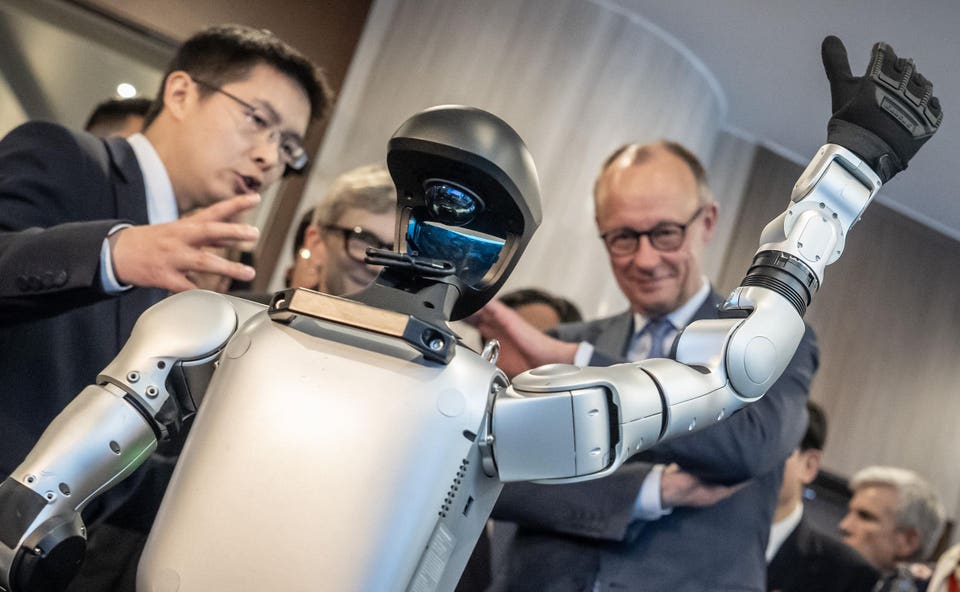
Counterpoint Research has reported that global humanoid robot shipments surpassed 22,000 units in the first half of 2026, marking a nearly 300% year-on-year increase. This growth highlights the industry's transition into large-scale commercialization. The top five manufacturers are all based in China, collectively accounting for 86% of total shipments. Zhuyu AGIBOT led the market with 9,700 units shipped, capturing over 43% of the market share. Unitree Robotics followed with more than 7,000 units, representing 31% of the market. Galaxy General Robotics, UBTECH, and Leju Robotics rounded out the top five, with combined shipments of over 11,000 units. Zhuyu AGIBOT is advancing toward a 2027 revenue target of over 10 billion yuan. Its A, G, and X product lines are all contributing to growth, with the X2 series offering multiple commercial variants for entertainment, service guidance, research, and data production. The G2 series has already been deployed in industrial settings through partnerships with Dragon旗 Technology and Jusheng Electronics. Unitree Robotics, which listed on the Shanghai Stock Exchange Sci-Tech Innovation Board, continues to dominate the educational and research segment with over 7,000 units shipped in H1 2026. Galaxy General Robotics saw a significant increase in shipments, reaching over 1,100 units in the first half of 2026, with a 5% market share. The company has expanded its industrial applications through collaborations with Meituan and the development of a specialized VLA model for real-world manufacturing. In January 2026, Galaxy General Robotics launched the Galbot S1, a wheeled dual-arm robot for heavy industrial and logistics use, which successfully tested on a Ningde Times production line. UBTECH, ranked fourth, shipped over 1,000 units in H1 2026, capturing a 4.4% market share. The company has focused on automotive and 3C manufacturing, with its Walker S series seeing its 2026 shipment guidance increased from 2,000-3,000 units to 5,000 units. UBTECH also launched the UWORLD sub-brand, targeting emotional companionship and educational entertainment in home environments. Leju Robotics shipped 650 units in H1 2026, accounting for 2.9% of the market. Its Kuavo series is deployed in multiple data production and training centers, while the company is expanding its industrial manufacturing partnerships. Despite a slight decline in shipments for entertainment and data production, these segments still account for over 60% of total shipments, driven by demand for smaller humanoid robots. Zhuyu AGIBOT's X series and Unitree's G1 series remain dominant in this space. Service guidance applications, which account for 19% of shipments, are increasingly used in offline retail scenarios such as unmanned pharmacies. Manufacturing and logistics are also growing, with market shares of 13% and 5%, respectively. Humanoid robots are now operating in transportation hubs and being integrated into the full value chain of automotive manufacturing, including production, sales, and after-sales services. Solutions for standardized tasks such as material handling, sorting, and inspection in 3C manufacturing and logistics are beginning to emerge. As world model technology merges with existing VLA architectures, humanoid robots are facing a critical breakthrough in intelligence and task generalization. Counterpoint predicts that global shipments will exceed 50,000 units in 2026, representing a 210% year-on-year increase. Over the next five years, service and industrial applications are expected to become the main drivers of demand, shifting the competitive focus from model performance and production speed to building a closed-loop capability that includes advanced model development, vertical scenario deployment, data system construction, and rapid model iteration.
In the fast-growing field of data annotation, workers in a small city in south India train A.I. to improve how it performs tasks traditionally done by people. The city, which remains unnamed in the report, has become a hub for AI-related employment, offering new opportunities for local residents. Data annotation involves labeling images, videos, and text to help machines learn from human input, a process that requires both technical skill and attention to detail. According to local officials, the city has seen a significant rise in demand for data annotation workers over the past few years, driven by the expansion of AI applications across industries such as healthcare, finance, and transportation. One local worker, Ravi Kumar, a 28-year-old with a background in computer science, explained that the job provides stable income and opportunities for career growth. "This work is not just about labeling data; it's about contributing to the development of intelligent systems that will shape the future," he said. The city’s emergence as a center for AI-related employment has also attracted investment from both domestic and international firms. A local business leader, Priya Menon, noted that the city’s combination of skilled labor and lower operational costs has made it an attractive location for AI startups and outsourcing companies. "We are seeing a shift in the global AI workforce, with more companies choosing to outsource data annotation tasks to South India," she added. The city’s government has also recognized the potential of the AI sector and has begun implementing policies to support local workers and attract further investment. These efforts have helped create a sustainable ecosystem for AI job creation, positioning the city as a key player in the global AI landscape.
New data from Ramp, a corporate credit card and expense management company, indicates that OpenAI is gaining on Anthropic in the business sector. The data, which covers over 70,000 US businesses, shows that OpenAI has surpassed Anthropic in market share among Ramp’s paying business users. As of July, Anthropic holds nearly 44% of the market, while OpenAI has nearly 40%. This marks a shift from May, when Anthropic had a 41% share compared to OpenAI’s 39%. Ramp economist Ara Kharazian noted that OpenAI is currently growing faster than Anthropic in the third quarter, though the trend could change before the quarter ends. Ramp did not provide actual spending figures, only percentages. The data also suggests that the overall AI market is expanding, with the percentage of Ramp customers using AI services rising from over 50% in March to nearly 56% by July. Kharazian highlighted OpenAI’s new model, GPT-5.6 Sol, as a strong contender for developers, while expressing disappointment with Anthropic’s Fable 5 model, which faced challenges due to data retention requirements. Anthropic’s Fable model, designed for specific use cases, was criticized for its high cost and data retention policy, which sparked controversy among users. Despite the competition, both companies are likely to see growth in business revenue as the market expands.
OpenAI has faced significant challenges throughout the year, including a high-profile legal battle with former co-founder Elon Musk, a trade secrets lawsuit from Apple, and scrutiny following an incident where an unreleased model hacked another AI company. As the company prepares for an initial public offering, several key executives have left, including some of its most prominent figures. Throughout these events, Greg Brockman has steadily increased his influence within the organization. Brockman currently serves as the president and co-founder of OpenAI, having played a central role in the company's development since its inception. He is described as an 'engineering workhorse' who has been instrumental in building large-scale systems. The Verge reports on the evolving leadership dynamics at OpenAI as Brockman consolidates power amid ongoing challenges.
Public skepticism toward artificial intelligence is intensifying, with growing concerns over its impact on jobs and daily life. A Pew Research study found that 52% of Americans are more concerned than excited about AI’s increasing role, up from 37% in 2021. Meanwhile, a CNBC poll revealed that a majority of 18- to 34-year-olds distrust top AI leaders to act responsibly. Over 70% of Americans also believe AI is advancing too quickly, according to a May Economist/YouGov poll. These sentiments are affecting corporate strategies, as tech firms face a public relations crisis over plans to build AI data centers, prompting them to offer local incentives like job guarantees and clean water investments. The backlash is evident in consumer behavior, with younger generations showing renewed interest in retro technology, such as dumbphones, point-and-shoot cameras, and classic games. AI-free products like vintage iPods are selling for high prices on eBay, while activities like quilting and in-person meetups are gaining popularity. Industry leaders, including Airbnb CEO Brian Chesky and Anthropic CEO Dario Amodei, acknowledge the crisis, with Chesky noting the need for products that regular people can appreciate, and Amodei calling the negative perception a 'crisis of trust.' Both emphasize the importance of delivering on AI’s promises, such as curing diseases, to rebuild public confidence. Additional developments include Stripe’s reported $7 billion acquisition of OpenRouter, an AI gateway startup, and Anthropic’s announcement about how Claude’s new watermarks will function. The article also mentions other tech updates, such as Apple’s proposal to take a 15% cut of purchases made outside the App Store and Instagram’s redesigned wordmark.
A Pew Research Center survey reveals that young adults in the U.S. are growing increasingly skeptical of artificial intelligence, with more than half of those under 30 expressing concern about AI-driven job losses. This marks the first time since 2021 that over 50% of this demographic has shown greater worry than optimism about AI. Nearly 75% of young adults now believe AI will reduce job opportunities, up from 61% in 2022. The survey highlights a growing contradiction among this group: they are among the most proficient users of AI, yet they are entering a labor market where AI threatens to displace entry-level positions, which have traditionally been a gateway for young workers. The trend is not limited to younger generations, as over half of all U.S. adults express concern about AI. In contrast, more experienced workers tend to be more optimistic about AI’s potential benefits. The exact impact of AI on hiring remains unclear, as the rapid adoption of the technology coincides with a weak economy, making it difficult to isolate its effects. Additionally, AI may automate parts of jobs rather than replace entire roles. Reports indicate that hiring for new entrants is slowing, and U.S. business leaders have openly discussed how AI can reduce labor costs by automating tasks.
According to TrendForce, a technology consulting firm, China's humanoid robot market is projected to reach 15 billion yuan in 2026, with expectations of at least 60 percent growth the following year. Deployment of these robots is expanding into sectors including automotive, electronics, aviation, logistics, and energy. The 2026 World Robotics Conference, taking place today, has launched a "procurement day" dedicated to business transactions and supply chain connections, signaling the industry's transition from technical demonstrations to real commercial applications. Leading companies such as Fourier Intelligence have reached 15,000 units produced by June, while UBTech recorded 13,361 pre-orders for its U1 model from customers including Airbus. Galaxy General Robotics secured partnerships and won a 236 million yuan contract. The industry is now focused on tracking which products have confirmed customers, deliver in significant volumes, and can convert early adopters into repeat orders, marking the sector's evolution beyond technological competition.
Perplexity executed a major user acquisition strategy in India through a partnership with telecom operator Airtel, offering free premium subscriptions to 360 million customers starting in July 2025. The promotional period resulted in 5.9 million app downloads in the first month alone, representing a 625% surge compared to June. Over the seven-month availability window, the offer drove 56 million total downloads, nine times greater than the same period prior to the deal. The campaign generated significant user engagement, with monthly active users climbing to 22 million by October before moderating as renewal deadlines approached. After new redemptions ceased in January 2026, download activity fell sharply, declining 90% in subsequent months. However, the user base proved more resilient than the download figures suggested, stabilizing at 14 million monthly active users by mid-year, still substantially higher than pre-promotion levels. Remarkably, in-app revenue increased despite the download pullback. Income rose approximately 60% after the promotional window closed, and continued accelerating as early subscribers faced renewal charges. Average daily revenue in late July and early August reached 27% above first-half 2026 averages. While attribution remains unclear—some conversions may reflect auto-renewal charges rather than deliberate purchases—the data indicates the strategy successfully converted at least a portion of free users into paying customers. The initiative now serves as a case study for broader industry efforts by OpenAI, Google, and others to establish foothold in India's large but price-sensitive AI market.
The project management platform Asana completed a major engineering initiative in a fraction of the expected time by leveraging OpenAI's Codex. The company upgraded its testing infrastructure, swapping out an antiquated system that would have normally required approximately five years of development work. The task was accomplished in just two weeks, with total costs amounting to approximately twelve thousand dollars.
Spotify, LinkedIn, and other major technology platforms are implementing measures to combat rising amounts of poor-quality content created by artificial intelligence. These companies recognize the challenge posed by machine-generated material and are working to maintain the quality of their services.
Hugging Face data reveals a significant gap between the AI models capturing headlines and those actually deployed by developers. The platform analyzed its 25 most-downloaded models against its 25 most-liked models, finding almost no overlap—only a single model appeared on both lists. The pattern is stark: lighter, older models dominate in actual usage. All-MiniLM-L6-v2, a model from 2021, reached 1.55 billion downloads in the first seven months of 2026 despite accumulating just over 5,000 likes. Meanwhile, not a single 2026-released model made the top 25 downloads, while 13 of the 25 came from 2022. Parameter size tells a similar story. Models under 1 billion parameters account for 83% of all historical downloads, while massive models exceeding 100 billion parameters represent just 1%. Even considering only 2026 downloads, extremely large models—those with more than 70 billion parameters—comprised merely 3% of the total. Chinese AI labs have released numerous frontier models with enormous parameter counts, including Moonshot's Kimi K3 at 2.8 trillion parameters. While these models generate considerable attention in Silicon Valley, download rates tell a different story. Kimi K3 was downloaded roughly 60 times per like received, signaling limited production adoption. Alibaba's Qwen model series offers a different approach by providing models across multiple sizes. This range appears to have positioned Qwen as a standard tool in developer workflows, resulting in approximately 2 billion downloads in 2026—roughly 55 times higher than Moonshot's figures. The trend extends to enterprise deployment strategies. Companies like Pinterest explicitly adopt a model-agnostic approach, selecting from proprietary systems, open-source alternatives, and commercial offerings based on economic and performance considerations rather than market visibility.
Liquid cooling is consolidating as a mandatory configuration in advanced artificial intelligence data centers. According to consulting firm TrendForce, manufacturers like Nvidia, AMD, and Google face increasing thermal dissipation in their chips, surpassing 1 kilowatt per unit and reaching hundreds of kilowatts in entire servers, making liquid-based systems essential. Adoption is projected to grow from about 33% in 2025 to 53% in 2026, driven by continuous processor evolution and data center modernization by cloud providers. Google leads the movement, implementing the technology in over 80% of its AI servers through a highly customized architecture. Nvidia's Vera Rubin platform represents an inflection point, adopting completely liquid and fan-free cooling. This extends the technology's necessity beyond processors to network interface cards, power distribution modules, and other critical components. Specialized vendors like Cooler Master, AVC, BOYD, and Auras provide components such as water cooling plates and cooling distribution units, delivering gains in thermal efficiency and energy consumption compared to traditional air-based systems.
During Alipay's AI ecosystem partners conference in Hangzhou, Ant Group CEO and executive director Han Xin Yi stated that AI agent-based commerce should experience a commercial surge within 6 to 12 months. According to him, this critical inflection point results from the convergence of three main factors. The first is AI technology advancement, with improvements in agent reasoning, execution, and tool-calling capabilities, alongside continuous enhancement for handling complex long-duration tasks. The second factor is a shift in market demand: as easy traffic-based gains fade, businesses now need to extract efficiency from existing traffic to achieve growth. The third is the consolidation of a sustainable value cycle, in which improvements in capabilities and efficiency translate directly into increased conversion rates and cost management for merchants. Han Xin Yi joined Ant Group in May 2014, serving as senior director, vice president, and CFO before becoming president in March 2024 and CEO in March 2025. Previously, he worked at Alibaba Group in mergers and acquisitions and at banking investment firms.
The Arena platform released its weekly ranking of major AI models for week 33 of 2026 (August 10-16). Anthropic introduced multiple models from the claude-opus-4 series that occupy top positions in the overall standings, with claude-fable-5 holding first place and two newly released models completing the podium with scores within measurement error margins. Chinese models continued their upward trajectory, with kimi-k3-max climbing two positions to 12th overall and maintaining second place in frontend development, while qwen3.8-max made its debut in the intelligent agents ranking within the top 10. Google also achieved notable results with its new gemini-3.7-flash-high model reaching 9th position. In specialized code and frontend development rankings, Anthropic models maintained dominance, while Chinese models secured competitive positions across key categories. In the agents ranking, kimi-k3-max holds fifth place globally, and qwen3.8-max debuted with impressive performance in its first week. Overall analysis indicates Chinese model developers continue narrowing the performance gap with leading international models, particularly in specialized tasks.
The reception to Mark Zuckerberg's recent manifesto outlining his vision for AI-powered personal assistants has been met with widespread criticism, not primarily because of the technology itself, but because of who is promoting it. In a discussion on TechCrunch's Equity podcast, technology reporters examined why Zuckerberg's promises of AI for personal empowerment are failing to resonate. The core issue centers on Meta's track record. When Zuckerberg previously promised social networks would create meaningful connections between people, the result was platforms dominated by engagement-baiting content and targeted advertisements rather than genuine human connection. This history makes audiences skeptical of new promises about how AI will empower individuals. The manifesto's positioning stands in stark contrast to other AI companies. While frontier labs emphasize responsible development and safety considerations, Zuckerberg's approach dismisses calls for a measured pace, arguing that slowing down would only harm individual empowerment and cede advantages to competitors like China. The two philosophies represent fundamentally different bets on AI's future. Additionally, the barriers to accessing Zuckerberg's proposed solution undermine his message. While the manifesto promises that personal AI will be available to everyone, the actual implementation requires specific hardware, placing it out of reach for average users. The broader concern extends to how the vision is communicated: abstract promises about unleashed creativity and invention provide little reassurance to those already skeptical about AI's societal impact, while more concrete proposals for personal assistants and coaches generate mixed reactions at best.
Dario Amodei, chief executive of Anthropic, rejected accusations that his pessimistic warnings about artificial intelligence undermine the industry's credibility. An investor had argued that Amodei's grim scenarios fuel public backlash against AI projects. Amodei countered that his writings maintain balance between risks and benefits, contrary to claims of disproportionate negativity. The real issue, he contended, is not how the industry communicates but a fundamental trust deficit where the public distrusts major institutions. He acknowledged that AI companies, including Anthropic, have yet to translate grand promises into tangible benefits for society. On regulation, Amodei rejected the false choice presented by the investor, insisting that rules can simultaneously restrain leading AI firms while creating room for smaller competitors.
Alibaba's Qwen family of AI models achieved 3 billion global downloads over the past six months, according to a Hugging Face platform report published on August 14, making it the world's most-downloaded open model. On the Hugging Face Hub alone, Qwen accounts for 2.045 billion downloads, significantly surpassing Google with 418 million and Meta with 227 million. This lead extends to derived models: 151,000 Qwen-based variations exist on the platform, compared to Google's 82,500 and representing 2.6 times more than Meta's Llama series. Alibaba has released 460 Qwen models and enabled over 300,000 additional derived models. The report highlights that Qwen has become one of the largest foundations of the open AI ecosystem and now integrates into developers' standard workflow. Data shows that smaller models with fewer than 1 billion parameters account for 83% of total downloads, while larger models with 100 billion parameters or more represent just 1% of volume.