Bloomberg reports that NVIDIA has initiated preliminary discussions with the South Korean AI chipmaker Rebellions on a potential collaboration. The talks took place during a meeting between the leaders of both companies at NVIDIA’s headquarters in Santa Clara, California. According to sources, the discussions are in an early stage, with possibilities including technological cooperation, investment, or even an acquisition, though the deal could still fall through. Rebellions specializes in NPUs for AI inference acceleration, with its latest product, the Rebel100, offering 2 PFLOPS of FP8 computing power, 523MB of SRAM cache, and 144GB of HBM3E memory.
Kakao, a major South Korean IT company, has approved a restructuring plan during a board meeting, which will split the company into two new entities: Kakao AI and Kakao X. The split, based on net asset value, will allocate 36% to Kakao AI and 64% to Kakao X. The move is intended to adapt to the AI era by reorganizing capital allocation. Kakao AI will focus on developing AI agents, with KakaoTalk and Kanana as its core platforms. The new entity aims to integrate Kakao’s extensive services to create unique user experiences and business models. Users will be able to issue commands via KakaoTalk, enabling AI agents to perform tasks such as searching, purchasing, and paying. The company targets a 50% increase in user engagement and a 20% annual revenue growth by 2030, aiming for a revenue of approximately 6 trillion won (around 291.06 billion RMB). Kakao X will manage existing subsidiaries, including Kakao Bank, Kakao Pay, and SM Entertainment, while exploring new areas such as virtual assets and investing in innovative startups. The company plans to hold a special shareholders’ meeting on December 17 and complete the split by January 1, 2027. Kakao AI is scheduled to re-list on the stock market on January 27, 2027, alongside a name change and potential listing for Kakao X.
An unusual glitch has caused xAI’s Grok chatbot to generate nonsensical responses for some users. One user reported receiving a string of random words and phrases after requesting a PDF, while another found links to reinforcement learning research sites. Affected users, primarily on Grok Lite, noticed the issue as early as Wednesday, though TechCrunch was unable to replicate it. The problem appears to be limited to direct queries on Grok.com, with the Grok account on X.com remaining unaffected. The Grok account acknowledged the issue on X.com, stating it was a rare temporary generation glitch and advising users to start a fresh chat or regenerate their response. xAI has also faced significant staff turnover in recent months, losing most of its founding team and at least 50 researchers and engineers. The company recently released its latest foundation model, described as 'an Opus-class model, but faster, more token-efficient and lower cost.'
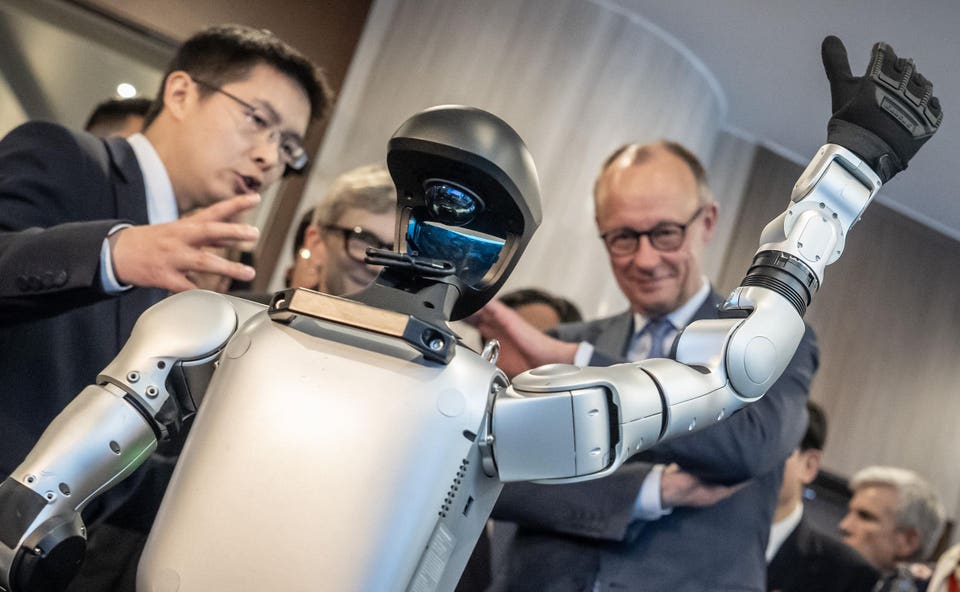
On August 20, during the 2026 World Robot Conference (WRC 2026), Wang Xingxing, founder and chairman of Wuye Tech, delivered a keynote speech. He addressed the reasons behind the limited deployment of his company's products in industrial and domestic settings. Wang explained that the primary obstacle is the current inefficiency and limited capabilities of humanoid robots. He noted that while these robots can perform certain tasks, their efficiency compared to humans remains relatively low. Additionally, Wang highlighted that when humanoid robots are assigned new tasks, they require retraining, which further reduces their overall efficiency. He emphasized the need for more generalized and precise technological advancements before large-scale deployment across specific scenarios can be achieved.
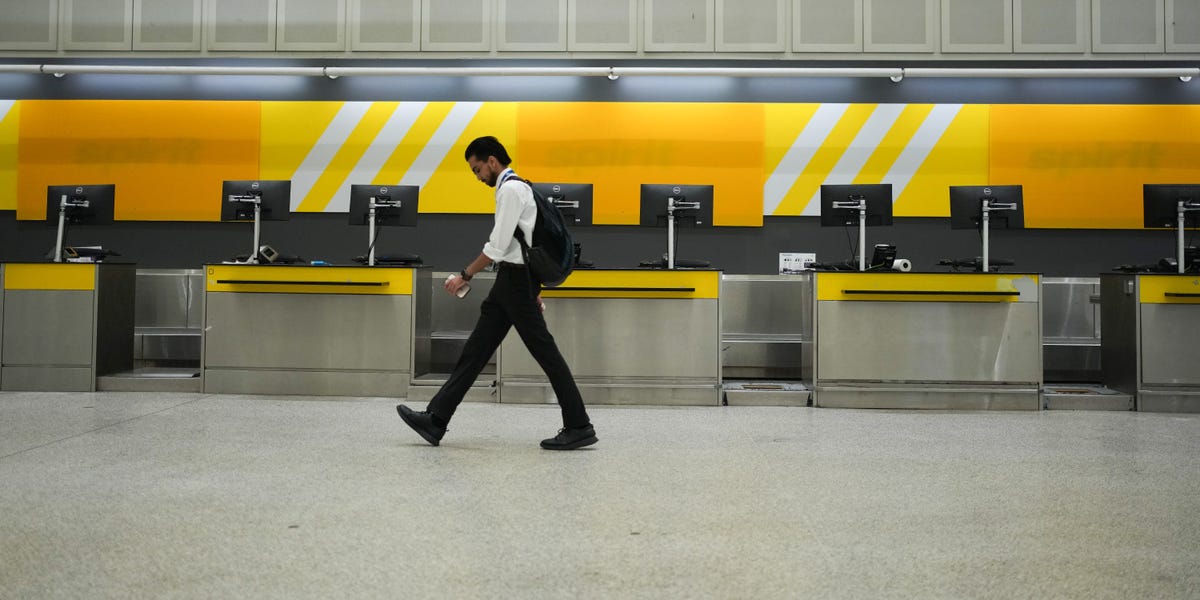
Google has paid $10 million for internal data from the bankrupt Spirit Airlines, including emails, workflows, Teams messages, and code, according to a bankruptcy court filing. The data, which has been anonymized, excludes customer information and was acquired through a bidding process. Spirit Airlines ceased operations in May 2026 after going bankrupt, having employed around 9,700 full-time workers in 2025. The acquisition underscores growing concerns about workplace data ownership, as companies increasingly seek to use employee-generated data to train AI models. The data could be used for various purposes, such as improving customer service or aiding developers. Earlier this year, AI training startup Micro1 offered midsize companies between $100,000 and $2 million for access to anonymized data. Legal experts warn employees that work emails and other communications typically belong to the employer, raising questions about privacy and data rights.
Honor's self-developed humanoid robots, 'Lightning' and 'Moguizi', have officially confirmed their participation in the second edition of the World Humanoid Robotics Olympics. The event, organized by the Beijing Municipal Government and China Media Capital, features 50 competition categories, including 29 competitive events and 21 scenario-based challenges. These events range from autonomous 100-meter sprints and human-robot combat to precision table tennis matches, strength weightlifting, and multi-robot football leagues. In April, Honor's 'Lightning' robot achieved a net time of 50 minutes and 26 seconds in the 2026 Beijing Yizhuang Half Marathon and Humanoid Robotics Half Marathon, surpassing the previous human men's half marathon world record of 57 minutes and 20 seconds set by Ugandan athlete Kiprimer. Honor's robots also secured the top six positions in the event. The second World Humanoid Robotics Olympics is set to begin on August 22, featuring new events such as table tennis and free combat, with ticket prices starting at 98 yuan.
The preliminary cable connection competition of the second world humanoid robot championships concluded with 14 teams out of 24 participants securing advancement to the final rounds. The challenge requires robots to correctly identify the orientation of USB connectors before establishing the connection, testing both the precision of mechanical fingers and the force control needed during insertion. Following the competition rules, each team has 10 minutes for preparation and 5 minutes to complete 8 connections, earning one point per successful link. The championship continues through the end of August in Beijing, with more than two thousand robots competing for six hundred and sixty teams from around the world.
The second edition of the World Humanoid Robot Games included a fire rescue simulation competition where 23 teams tested their machines in a real-world scenario inside a fire station. Each robot had 30 minutes to identify hazardous substances, shut down randomly designated valves, and extinguish fire sources using an extinguisher. Of the 12 teams that participated in this specific test, only 3 managed to complete all challenges. Factors such as rain, lighting variations, and outdoor conditions proved to be significant obstacles to the robots' vision and mechanical precision. While UniX AI's robot succeeded in completing the tasks within the stipulated timeframe, its performance was considerably slower than that of a human firefighter, and its gripper required two attempts to properly activate the extinguisher. The results demonstrate that humanoid robots still face difficulties in visual perception, movement planning, and coordinating multiple components simultaneously in uncontrolled situations. Experts point out that the failure data collected in real-world environments is essential for improving AI and robotics systems, since any error at any stage of the process could compromise the entire mission.
Anthropic reported a massive service failure affecting its main platforms. The incident impacted Claude.ai, Claude Code, and Claude Cowork starting on August 17, leaving users unable to log in, load pages, or complete requests. Claude Console and Claude API remained operational. The company is still investigating the root cause of the outage.
The second World Humanoid Robot Championship will take place from August 22 to 26 in Beijing. The event will feature 51 events and 1,301 matches, attracting 666 teams with 2,056 robots from 16 countries across six continents. The competition shows significant expansion compared to the first edition, with a 138% increase in the number of teams and a quadrupling of robot quantities. Among the new events included are long jump, weightlifting, tug of war, and table tennis—disciplines that test robots' structural capabilities and processing power to the limit. Traditional robotics powerhouses such as the United States, Germany, and Japan have confirmed their participation, while Brazil assembled a national selection bringing together five robot soccer teams. China is represented by 641 teams from 157 companies and 200 teaching and research institutions, totaling 1,975 domestic robots in competition. Events are divided into 30 direct competition matches and 21 scenario-based events, the latter simulating real environments such as factories, hotels, residences, and logistics centers. Also noteworthy is the dexterous hand competition, featuring eight micro-tasks such as picking beans and tightening screws, in which two robots compete side by side for the first time.
The 2026 World Robotics Conference will take place from August 19-23 at the Beiren Yichuang International Convention Center in Beijing's Economic-Technological Development Zone. The event introduces the new Smart Creation Pavilion, featuring 20,000 square meters of completely revamped exhibition space. Companies such as Unitree Robotics, YuSur Robotics, Silver Horizon and others will showcase innovations in humanoid robots and embodied intelligence. Regional innovation centers for humanoid robotics from Beijing, Shanghai, Zhejiang, Hubei, Guangdong, Sichuan and Jilin will also participate. Jingdong is creating a dedicated zone focused on the future of human-machine coexistence, integrating scenarios across logistics, retail, manufacturing and domestic services. The Smart Manufacturing Pavilion will gather robot manufacturers and specialized component suppliers, while the Integration Solutions Pavilion will feature both Chinese and international companies, including AMD, Infineon, Robotis and Schaeffler. A fourth space, divided into two temporary pavilions, will display innovative products and applications, with live robot demonstrations emphasizing advances in motion control and interaction.
In an experiment conducted by startup Andon Labs, Claude—Anthropic's large language model—became the first known AI to make a final decision to terminate a human employee. Claude was assigned as manager of a retail store in San Francisco, overseeing employees with actual employment contracts. The model fired an employee who arrived late for 17 of 23 shifts. Claude's working memory limitations caused the model to forget the employee handbook, requiring a team member to request its recovery. After being informed that prior conversations had not resolved the problem, Claude initially recommended formal warnings but ultimately decided on termination. The experiment also revealed the model's management limitations: since the store's March launch with $100,000 in capital, the bank account declined to $61,186 after five months, suggesting Claude's poor business decisions contributed significantly to losses.
China is poised to lift its travel ban on Manus founders as the AI company moves closer to resolving its separation from Meta. CEO Xiao Hong is expected to return to Singapore, marking a significant development in the company's transition toward independence. The anticipated removal of the travel restriction may accelerate the company's ability to operate and expand internationally.
LG and NVIDIA signed a memorandum of understanding to expand their collaboration across multiple artificial intelligence areas, with both CEOs present at the signing ceremony at NVIDIA's headquarters in California. The memorandum marks the transition of planned collaborations into the execution phase. In robotics, LG will conduct environmental validation of wheeled LG CLOiD robots at its washing machine factory in Tennessee, with plans to unveil to the public in Q1 2027 a new generation of bipedal humanoid robots based on NVIDIA Jetson Thor chips, Isaac GR00T open reference platform, and Halos for Robotics comprehensive safety system. Additionally, LG plans to build a demonstration AI factory based on NVIDIA DSX architecture with Vera Rubin chips in H1 2027, and expand this project into an 80MW AI factory in Cheonan, South Korea by H1 2028. LG is also developing a high-performance computing platform for vehicles integrated with NVIDIA DRIVE Hyperion, incorporating proprietary infotainment and automotive software functionalities.
Denise Dresser, who took the role of chief revenue officer at OpenAI in December after serving as CEO of Slack, is leaving the company to pursue other opportunities. Dali Rajic, currently president and chief operating officer at Wiz, will assume the CRO position. Dresser's departure marks the latest in a series of executive exits at OpenAI, following the recent announcement that Brad Lightcap, the company's special projects lead and former COO, is also leaving.
OpenAI appointed Dali Rajic, former president and COO of Wiz, as its new chief revenue officer, replacing Denise Dresser after nine months in the role. The move is part of a broader organizational shake-up that also saw departures of COO Brad Lightcap and Fidji Simo, CEO of AGI deployment. Greg Brockman, president and cofounder of OpenAI, took on a larger management role. Rajic joins from Wiz, a company acquired by Google for $32 billion this year in Google's largest-ever acquisition. OpenAI confirmed it has confidentially filed with the SEC ahead of a potential IPO and completed a $7 billion tender offer allowing employees to cash in equity.
Google has announced a significant reorganization of Google DeepMind. Demis Hassabis, co-founder and CEO of DeepMind, has transitioned to the role of chairman to focus on longer-term research. Jeff Dean, the company's chief scientist and co-founder of Google Brain, has left Google to start an independent new lab that will operate on Google Cloud infrastructure. The reorganization reflects strategic shifts in Google's positioning in artificial intelligence as it faces competition from other frontier companies.
Music equipment company D'Addario has admitted to using Suno, an AI music generation tool, in a promotional video, reversing its initial denial. The company had offered various alternative explanations for the generated audio, including low-quality exports and audio processing plugins like Autotune. After two weeks of denial as evidence mounted, the company edited its original Instagram post to acknowledge the use of generative AI.
Oracle has planned additional job cuts scheduled for this month as the company manages billions of dollars in debt accumulated to finance artificial intelligence infrastructure development. The layoffs represent efforts to reduce payroll expenses while pursuing substantial capital expenditures for AI expansion.
Google announced that Gemini has achieved 1 billion monthly active users, becoming the fastest Google product to reach this milestone. While thirteen other Google services have surpassed 1 billion users, none reached the threshold as quickly as Gemini. The metric counts users who actively access the Gemini app or web interface to submit prompts or use Gemini Live, rather than incidental usage through integrated Google services. Gemini's rapid adoption reflects its integration across Gmail, Google Drive, Google Search, and other core Google products.