Sanjay Mehrotra, CEO da Micron, afirmou que a inteligência artificial (AI) transformou profundamente o ciclo de demanda no setor de memória. Segundo Mehrotra, a dependência de memória por parte dos sistemas de IA criou uma demanda mais duradoura, mudando a dinâmica tradicional do setor, que antes seguiu um padrão de 'aumento da demanda → aumento da produção → excesso de oferta → queda de preços'. A declaração foi feita enquanto a Micron constrói uma nova unidade de fabricação de semicondutores em Boise, no Idaho, que incluirá dois fábricas, cada uma com área equivalente a 10 campos de futebol americano. A unidade prevê-se iniciar as operações em 2027. Mehrotra destacou que a demanda por memória não se limita aos centros de dados, mas também inclui setores como automação, robótica e dispositivos de consumo inteligentes. No entanto, ele admitiu que a produção atual da empresa não é suficiente para atender à demanda, já que os clientes finais estão comprando todos os produtos disponíveis e os clientes de centros de dados desejam uma quantidade duas vezes maior do que a que a Micron pode oferecer.
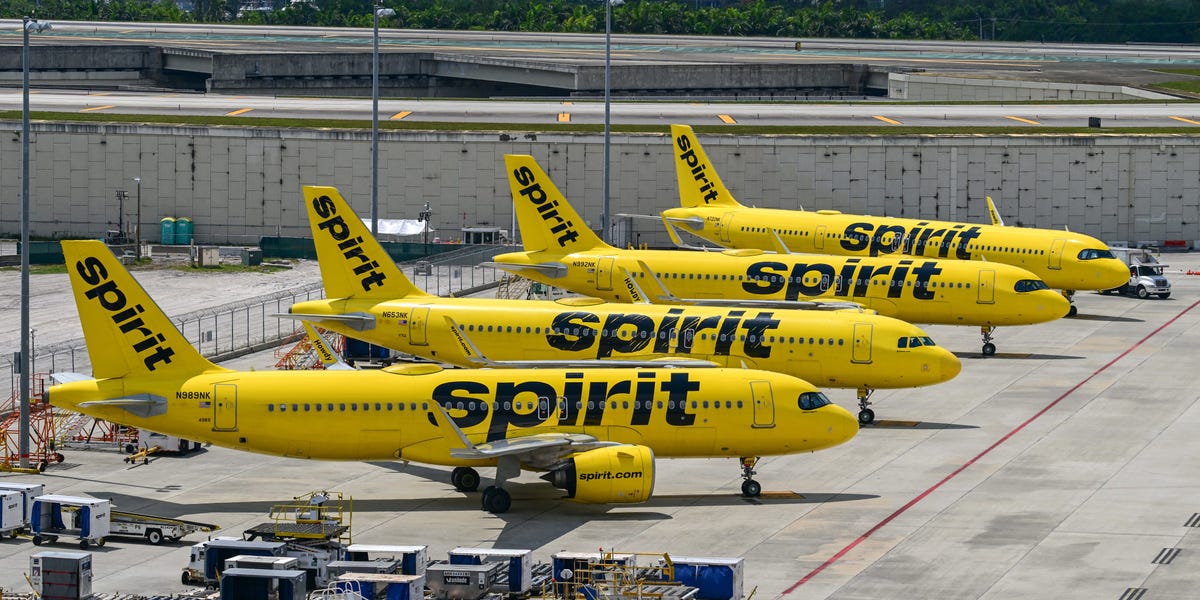
An AI training startup, Micro1, has submitted a $12.5 million bid for Spirit Airlines' data, aiming to challenge Google's winning $10 million offer. The bid, made on Wednesday, comes after Google successfully secured the data in a recent auction. Micro1's CEO, Ali Ansari, stated that the company's offer is significantly higher, reflecting the value of real-world data for training AI models. Spirit Airlines is currently in bankruptcy court, selling off its assets, including vast amounts of corporate data, following its collapse last year. Bankruptcy experts noted that while it is unusual for a late bid to be considered, it is not impossible. Ansari emphasized that realistic data is crucial for AI models to learn how to operate in real-world environments, calling Google's bid 'actually quite low' given Spirit Airlines' long history. Micro1, based in San Francisco, also pays gig workers to enhance AI models for its clients and runs digital environments where AI agents can practice tasks like booking train tickets. The company, founded in 2022, has around 150 employees and has received offers at a $2.5 billion valuation, according to Forbes. Another AI training startup, Mercor, also bid for the data, initially offering $5 million, which was later increased to $7.5 million, still falling short of Google's final bid. Google, Spirit Airlines, and Mercor have all declined to comment on the matter.
A AI chip startup, Fractile, has reached a preliminary agreement with Anthropic for a supply contract valued at approximately $250 million, according to a report by Bloomberg. The deal, which is expected to begin deliveries in 2027, involves Fractile’s AI ASIC inference accelerators. The company’s chips utilize an innovative 'analog memory computing' architecture, enabling 25 times faster performance and 10 times lower costs when running leading models. Fractile previously raised $220 million in May 2026, valuing the company at around $1 billion. The firm aims to secure additional funding at a valuation of $6.5 billion, with some of the new investment based on potential valuations below this target. The company’s technology is positioned as a competitive alternative to existing AI hardware solutions, offering significant efficiency gains over traditional approaches. The supply agreement with Anthropic highlights Fractile’s growing influence in the AI chip market, as it seeks to scale its operations and meet increasing demand from major AI firms. The deal underscores the company’s strategic focus on delivering high-performance, cost-effective solutions for large-scale AI deployment.
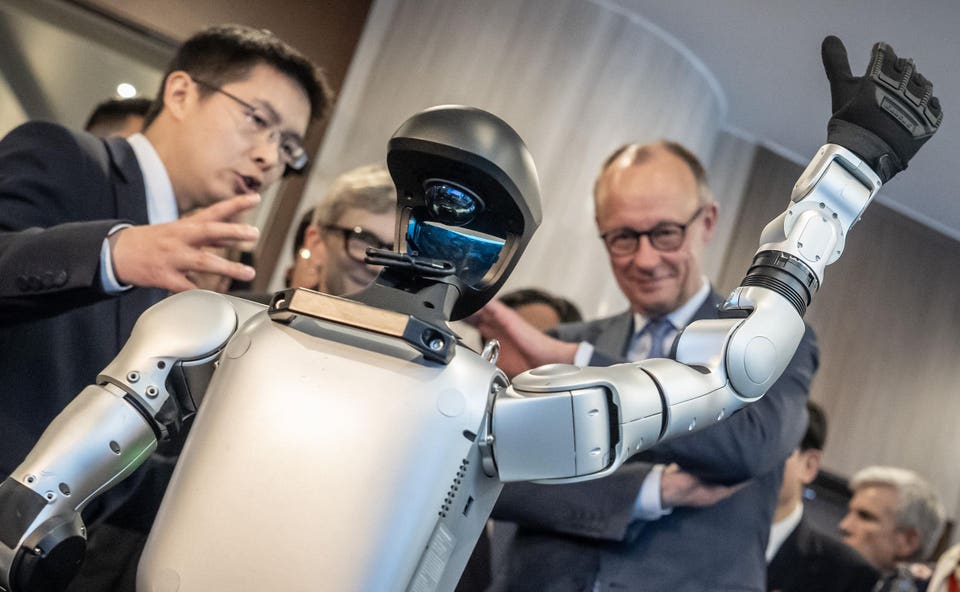
Yu Shi Technology, the first publicly traded company in China's humanoid robot sector, saw its stock price drop by 18.7% on the second day of its listing on the Sci-Tech Innovation Board. The company's shares opened at 1,100 yuan, a 629.44% increase from the issuance price of 150.80 yuan, pushing the total market capitalization to as high as 444.9 billion yuan. However, by the end of the trading session on August 19, the stock closed at 845 yuan, with a total market value of over 341.8 billion yuan. The following day, the stock fell sharply, ending at 277.9 billion yuan in market value, a decline of 1,670 billion yuan from its peak. During the 2026 World Robot Conference, Yu Shi Technology's founder and chairman, Wang Xingxing, addressed the limited adoption of their products in industrial and domestic settings, citing inefficiencies and limitations in current capabilities. He stated that while the robots can perform certain tasks, their efficiency compared to humans remains low. Wang also predicted that humanoid robots could enter the mass market within a decade, provided manufacturers overcome current practical challenges. He emphasized that the technology would need to handle 80% of tasks through voice commands in unfamiliar environments to drive market growth, a goal he estimates could be achieved in two to three decades.
According to Bloomberg, insiders have revealed that Broadcom is currently in discussions with multiple lenders to raise more than $600 billion through debt financing. The funds are intended to support an artificial intelligence (AI) chip project, which will aid Anthropic and other related companies. The proposed financing structure includes approximately $300 billion in subordinated debt tranches, with Broadcom also providing partial guarantees for a senior secured debt tranche ranging between $600 billion and $700 billion. The total financing amount could potentially reach up to $1 trillion, depending on the final structure and terms. Broadcom plays a crucial role in helping major tech companies such as Alphabet and Meta design custom chips, reducing their reliance on NVIDIA. The company has also entered into chip supply agreements with Anthropic and OpenAI. Blackstone and Apollo Global Management are currently in talks with Broadcom to participate in the financing round. However, the details of the financing, including the final amount and structure, remain under discussion and may change. The funding could be raised in stages rather than all at once. Broadcom, Anthropic, Apollo, and Blackstone have all declined to comment on the matter. The move comes as major tech firms increasingly seek to develop their own chips to minimize dependence on NVIDIA. The financing plan highlights Broadcom's strategic position in the AI chip market and its growing involvement with key players in the field.
Micro1, a data-labeling startup, has seen its gross annual run rate surge from $100 million to $50,000,000 over the past eight months, according to a source familiar with the company. The firm retains between 60% and 70% of this revenue, resulting in a net annual run rate of between $150 million and $200 million. While Micro1 still trails competitors like Mercor, which reached $2 billion in gross annualized revenue this summer, and Handshake, which hit $1 billion earlier this year, its rapid growth highlights the strong demand for AI training data. Some researchers suggest that future AI spending on data could rival spending on compute, which bodes well for Micro1. The startup is expanding its margins by generating synthetic data with minimal human involvement, such as automated video descriptions, and some of its data can be sold to multiple customers, pushing gross margins for off-the-shelf data as high as 80% to 90%. Micro1’s founder, Ali Ansari, has stated that the company does not sell its data to Chinese AI developers, unlike some competitors, and has emphasized its commitment to U.S. AI dominance. Ansari previously founded the company as an AI recruiting startup but pivoted to data-labeling after noticing clients used his platform for hiring annotators. Micro1 raised its Series A at a $500 million valuation in September and may have recently secured another round at a higher valuation. The company did not respond to a request for comment.
Etched, an AI chip startup, announced on August 18 that it has raised $700 million in funding, valuing the company at $21 billion. This follows previous rounds of financing, including a $500 million raise in December 2025, which valued the company at $5 billion, and a $3 billion investment in July 2026, which valued Etched at $10.3 billion. Jane Street, the lead investor in the latest round, has already received the first shipment of AI accelerator racks from Etched and reported being satisfied with the initial results. Jane Street stated that Etched's unique approach to inference provides the precision needed to support demanding workloads and expressed enthusiasm about deploying the racks in their data centers. The company has also been highlighted in previous reports, including one discussing its potential $200 billion valuation and another detailing its chip design, which features low voltage to enhance computational performance along with SRAM and HBM cache technologies.
Nvidia has pledged $100 billion in support for OpenAI's data center project in Ohio, marking a significant investment in the company's infrastructure. In addition to this commitment, the chipmaker has also invested $1.5 billion in an energy company that was founded as part of the SoftBank Group. The move underscores Nvidia's growing involvement in the development of AI technologies and its strategic alignment with OpenAI's expansion plans. The data center in Ohio is expected to play a crucial role in advancing OpenAI's research and development efforts, particularly in the field of large-scale machine learning. The investment in the energy company reflects Nvidia's broader strategy to secure reliable and sustainable power sources for its operations. This dual investment highlights the company's commitment to both technological innovation and environmental responsibility.
A startup named Silicon Data has raised $30 million in Series A funding to develop a pricing tool for AI compute, aiming to provide a reference price for GPU rentals and serve as an index for Wall Street futures contracts. The company plans to launch its compute futures trading on the CME on October 5th, pending regulatory approval. On an episode of TechCrunch’s Equity podcast, Steve Hou, head of research at Silicon Data, discussed the state of the AI buildout, highlighting that data indicates a different narrative than the prevailing doom and gloom about depreciating chips and stalled data centers. The AI industry continues to see massive investment, with hundreds of billions of dollars annually allocated to data centers and GPUs, making compute the largest cost for AI product development. Despite this spending, there remains no straightforward method to price compute or hedge against price fluctuations. The article also mentions other tech news, including Stripe’s reported $7 billion acquisition of OpenRouter, details on Anthropic’s new Claude watermarking system, and updates on Apple’s App Store policies and Instagram’s redesigned wordmark. Additionally, a flash sale is promoted for Disrupt 2026 tickets, offering up to $300 in savings.
Stripe has acquired OpenRouter, an artificial intelligence start-up, for $7.5 billion. The deal marks a significant move in the AI industry, combining Stripe’s payments infrastructure with OpenRouter’s platform that assists businesses in managing their AI model expenditures. The acquisition is expected to enhance Stripe’s capabilities in the AI sector by integrating OpenRouter’s technology into its existing services. OpenRouter provides tools that help companies allocate their budgets across various AI models, offering cost optimization and efficiency improvements. This strategic move underscores Stripe’s commitment to expanding its presence in the rapidly growing AI market. The transaction is seen as a major milestone for both companies, as it brings together financial services and AI innovation under one roof.
Google and Marvell have expanded their partnership in the semiconductor industry, with the agreement including an option for Google to purchase shares in the company. The deal, valued at $12 billion, marks a significant step in the collaboration between the two firms, which have been working together on advanced AI chip development. The partnership is expected to accelerate the production of specialized hardware for machine learning and artificial intelligence applications. Marvell, a leading US-based chipmaker, has been a key supplier of hardware for Google’s data centers and cloud infrastructure. The agreement also includes provisions for further investment and technological integration, positioning both companies to strengthen their competitive edge in the rapidly evolving AI market. The deal comes amid increased competition in the semiconductor industry, with major tech firms seeking to secure reliable supply chains and cutting-edge technology. Marvell’s CEO, Scott DeBoer, emphasized the strategic importance of the partnership, stating that it aligns with the company’s long-term vision to drive innovation in AI and data processing. The financial terms of the deal were not disclosed in detail, though the $12 billion figure reflects the combined value of the expanded collaboration and potential equity investment. This move underscores Google’s continued focus on building proprietary AI infrastructure, while Marvell aims to solidify its position as a leader in high-performance computing solutions. The partnership is expected to have a lasting impact on the AI chip market, influencing future developments in cloud computing and machine learning technologies.
Fei-Fei Li, known as the 'AI mother', has called on technology professionals to better explain the benefits of artificial intelligence to the public. She warned that rising public opposition to AI in the United States could pose risks globally. In an interview, Li emphasized the importance of the U.S. setting a positive example in AI development, highlighting its potential for significant economic value. She noted that resistance to AI data centers has increased in several U.S. regions, with concerns over water and energy consumption. A Pew Research Center survey found that half of Americans are more worried than excited about AI's growing role in daily life. In contrast, many Asian countries have a more positive attitude towards AI, which Li attributes to early emphasis on AI in basic education. Li, who is also an educator and scholar, reflected on the need for better public communication about AI. Her research laid the foundation for many modern AI breakthroughs, including the ImageNet project, which significantly advanced computer vision. She founded World Labs, which develops 'world models' capable of understanding and navigating the 3D world. World Labs recently secured a $1 billion investment, with potential applications in robotics, healthcare, and education. Li believes these technologies could have wide-ranging impacts across multiple sectors.
A former Bridgewater analyst, Ian McInnis, has launched an AI startup called Multiplier, formerly known as WithAI, which aims to provide smaller hedge funds with greater competitive advantages. The startup has secured $6 million in new funding from notable investors including Y Combinator, Bridgewater co-chief investment officers Greg Jensen and Karen Karniol-Tambour, Lux Capital, Opendoor CEO Kaz Nejatian, Fortress chairman Pete Briger, and Google DeepMind chief strategy officer Jas Sekhon. Several of the firm's clients are also contributing to the funding round. Multiplier focuses on enhancing the investment processes of fundamental stockpickers by developing AI tools that operate within clients' own clouds to protect proprietary strategies. McInnis, a Princeton graduate and former Bridgewater employee, emphasized the importance of both domain and firm specialization in the evolving AI-driven investment landscape. The startup's goal is to create AI agents capable of analyzing every stock globally on a daily basis, identifying opportunities and updating projections. This approach allows investment teams to focus more on areas where human intuition can lead to outperformance. Bridgewater's backing of McInnis's startup is significant, given the firm's own growing interest in AI, including collaborations with Mira Murati's Thinking Labs and a fund primarily managed by AI and machine learning algorithms. Jensen has also personally invested in OpenAI and Anthropic, highlighting the broader trend of Bridgewater's leadership embracing AI technologies.
Nvidia, em parceria com empresas de investimento como Apollo, BlackRock, Blackstone, Brookfield, Goldman Sachs e KKR, está a liderar uma iniciativa financeira de 500 bilhões de dólares para transformar a capacidade de computação em uma classe de ativo investível. A empresa afirmou que os chips de tecnologia são agora ativos produtivos, longevos, fungíveis e flexíveis, capazes de gerar receita. Jensen Huang, CEO da Nvidia, disse à CNBC que esta é a primeira vez que os chips tecnológicos se tornam um ativo investível. A iniciativa representa um marco na evolução da tecnologia e do investimento, comparando-se a períodos anteriores de inovação financeira. A notícia foi publicada originalmente no The Verge.
Unitree, a Chinese robotics company, saw its stock price rise by 500 percent on its trading debut, marking a significant milestone for the firm. This surge follows the company's initial public offering in the past month, which has positioned it as the second major Chinese technology firm to benefit from the country's artificial intelligence boom. The rapid increase in stock value highlights investor confidence in Unitree's potential to capitalize on the growing demand for advanced robotics and AI-driven solutions. The company's success underscores the broader trend of Chinese tech firms leveraging AI innovation to achieve substantial financial gains in global markets. Unitree's performance has also drawn comparisons to other successful tech startups in the region, further reinforcing its status as a key player in the AI industry. The strong market response to the IPO reflects the increasing importance of robotics and automation in both industrial and consumer applications, as well as the growing international recognition of Chinese technological capabilities in this field.
Venture capital investment in physical AI companies has surged in 2026, with global funding reaching $47.4 billion in the first half of the year. This marks a significant increase compared to the second half of 2025, which saw $12 billion in funding, and a nearly 80% rise from the first half of 2025. Combined funding from 2022 to 2024 totaled $41.9 billion, still lower than the amount raised in just the first half of 2026. Physical AI encompasses industries such as robotics, autonomous vehicles, aerospace, drones, industrial automation, and sensors. Several large deals contributed to the spike in investment. Waymo’s $16 billion Series D round, led by Alphabet, Dragoneer Investment Group, DST Global, and Sequoia Capital, accounted for nearly one-third of all venture dollars raised in the first half of 2026. The round was valued at $126 billion. Other notable investments include SpaceX’s $75 billion IPO at a $1.77 trillion valuation, HawkEye 360’s $416 million raise, and Aevex’s $320 million funding. Mobileye’s $900 million acquisition of Mentee Robotics, a Tel Aviv-based humanoid robotics startup, also stood out as a significant M&A deal. Ryan Ziegler, general partner at Edison Partners, highlighted that physical AI represents the convergence of software, hardware, sensors, and IoT, enabling real-world applications. He noted that AI’s ability to process data at scale and speed, combined with decreasing hardware costs, is driving investment. Edison Partners is particularly interested in high-value, traditionally analog industries where physical AI can become mission-critical infrastructure, such as manufacturing, supply chain, utilities, agriculture, transportation, and government. Joe Fath, partner and head of growth at Eclipse Capital, emphasized that AI and other enabling technologies are reducing the capital intensity of physical industries. He pointed to the alignment of technology, talent, capital, demand, and policy as key factors driving investment. Eclipse Capital defines physical AI broadly as intelligence embedded in systems that perceive, reason, and act in the real world, focusing on both infrastructure and applications. Fath expects value to accrue throughout the physical AI stack, with the strongest moats belonging to vertically integrated companies that own multiple layers.
Mojibot, the robotics division of Chinese automaker Chery, has begun preparations for an initial public offering across multiple markets, seeking capital to accelerate international expansion and technology investments. The company, established in January 2025, has already exceeded 3,000 units delivered globally, with half of these shipments directed overseas, reaching more than 60 countries and regions. For the coming year, Mojibot projects a substantial increase in humanoid production, targeting 10,000 deliveries. The company has developed humanoid robots for various segments, including retail, customer service, and law enforcement applications. Its police robot model currently has over 110 units operating across several Chinese cities, assisting with traffic management, crowd guidance, and public safety awareness. Company executives emphasize that traffic management represents a particular demand segment, especially in regions facing adverse weather and air pollution challenges. International markets, particularly in the Middle East and Southeast Asia, present even larger opportunities due to extreme climatic conditions. China's robotics sector is experiencing acceleration similar to the electric vehicle segment from several years ago, with numerous automotive and technology companies seeking market positioning. Mojibot executives acknowledge intensifying competition, particularly in cost considerations, and estimate that humanoid robots will require approximately ten years to reach technological maturity before mass adoption becomes feasible.
Unitree, a technology company, completed its initial public offering on the STAR Market of the Shanghai Stock Exchange, marking its entry into public trading. Shares surged, with gains reaching up to 629% on the first day, and the company achieved a market capitalization of 360 billion yuan. Wang Xingxing, CEO and founder of Unitree, controls approximately 30% of the company (21.44% directly and 9.54% indirectly). Based on current market valuation, his stake is valued at approximately 108 billion yuan, making him the richest billionaire of the post-1990 generation in China, surpassing Liu Jingkang, founder of Insta360, who previously led this ranking with a fortune of 20.2 billion yuan. Additionally, companies associated with DeepSeek founder Lu Wenfeng gained approximately 1.1 billion yuan in unrealized gains from the initial offering. Shunwei Capital, a fund created by entrepreneur Lei Jun, also benefited significantly with potential gains exceeding 15.2 billion yuan.
Chip manufacturers are channeling unprecedented capital into emerging startups, riding the wave of massive artificial intelligence-driven spending and soaring corporate valuations. A total of over $250 billion in funding rounds has involved major semiconductor players this year alone, surpassing any previous benchmark. Though OpenAI's $122 billion financing round in March—backed by Nvidia among other lead investors—dominates the annual figures, accounting for more than 95 percent of the total, semiconductor companies continue to back numerous other substantial ventures. Nvidia maintains its position as the most prolific investor, participating in 59 funding rounds through 2026, while AMD trails with 19 and Samsung with 17. The volume and scale of these transactions underscore semiconductor corporations' deepening involvement in startup ecosystems. With their own stock prices reaching historic highs, industry leaders are increasingly investing in the next generation of AI-focused companies, though questions linger about whether current investment levels can be sustained or signal an imminent market correction.
Etched announced a fresh funding round of $700 million that valued the artificial intelligence hardware maker at $21 billion. The rapid increase marks a dramatic acceleration, with the startup jumping from a $5 billion valuation in December to $21 billion in just four months, including a particularly sharp rise of roughly $11 billion in just one month following its July funding. The latest round was led by Jane Street, the renowned quantitative trading firm, which tested the startup's technology and committed to deploying it in its own infrastructure. Etched has engineered two key innovations to enhance inference, the computational process that follows a user's input. The company designed a specialized processor for the prefill stage, which handles initial prompt processing and context understanding. This chip operates at reduced voltage levels, enabling higher transistor density without excessive heat generation, allowing faster token processing. For the decode phase, which generates the actual output tokens, Etched created a cluster-scale memory system paired with specialized interconnects. This architecture permits multiple processors to share a unified memory pool with minimal latency, translating to improved performance and lower operational costs. Etched has moved beyond earlier perceptions that its chips were custom-tailored for specific models. The company's systems now support any frontier-level model. Jane Street noted in its announcement that testing confirmed the chip's capabilities meet their requirements for handling complex computational tasks, and they are operating their own server rack through Etched's infrastructure.