A OpenAI anunciou que o modelo GPT-Image-2 agora suporta a geração de imagens com fundo transparente. Os utilizadores podem criar imagens no formato PNG com um canal alfa, permitindo uma melhor apresentação em contextos como design de páginas de produtos em e-commerce, ilustrações para apresentações, elementos de adesivo e imagens de produtos. A funcionalidade está disponível apenas através de API, e os utilizadores devem ativar-a ao incluir o parâmetro background=transparent. A OpenAI aconselha os utilizadores a não descreverem o fundo nos prompts e a verificar cuidadosamente as imagens geradas para garantir a precisão dos números presentes nelas.
Qwen has introduced new capabilities within its work task mode, including skills, connectors, and work partners. These features are now available in the desktop version of Qwen, accessible through the sidebar under the 'Skills · Connectors · Partners' section. Over 200 skills and connectors are already available, with the option for users to create custom skills by organizing common workflows, standards, and templates into reusable processes. Connectors allow direct information retrieval and task processing within commonly used tools, while work partners enable users to select specialized agents based on their needs, forming collaborative teams to tackle complex tasks. The new features can be used independently or combined as needed, allowing users to standardize their workflows and enhance productivity.
DeepReinforce has announced the release of the Ornith-1.5 series of open-source AI models, emphasizing the integration of a 'self-improvement loop' during training. This mechanism allows the models to autonomously enhance their performance by continuously generating more challenging tasks during the learning process. The largest model in the series, Ornith-1.5-397B, is based on a mixture-of-experts (MoE) architecture with 397 billion parameters, and its performance surpasses that of Claude Opus 4.8 in certain tests. Another variant, Ornith-1.5-35B-A3B, also uses a MoE architecture with 350 billion parameters, outperforming dense models such as Muse-Glimmer-30B and Gemma-4-31B. The Ornith-1.5-9B model, a dense architecture with 9 billion parameters, demonstrates superior performance in most tests compared to the parameter-heavy Gemma-4-31B. Additionally, a quantized version named Ornith-1.5-9B-Mobile is available for mobile devices, including Android phones and the upcoming iPhone 17.
Jiajia Vision, a physics AI company founded in 2023, has unveiled its general-purpose bipedal humanoid robot, Maker L01. The robot features 31 joint motors and is capable of performing actions such as running, jumping, and flipping, with a maximum movement speed of 4 meters per second. It was demonstrated in a table tennis scenario. Weighing 42 kilograms, the robot is equipped with a 518Wh hot-swappable battery and is designed to be fully open-source, supporting both research and competition development out of the box. Jiajia Vision claims to be the first company in China focused on 'world models,' a core AI framework used to simulate environmental dynamics and predict future states. These models are expected to play a key role in embodied intelligence and autonomous driving. The company recently completed a billion-yuan A1 round of financing in November 2025, with investment from a well-known industry player and Huakong Fund. According to Qiushiwei, the 'well-known industry player' is Huawei's Habor investment arm. Jiajia Vision's product lineup includes the world model platform GigaWorld, the embodied foundation model GigaBrain, and general-purpose embodied hardware such as Maker. The company's focus on world models positions it at the forefront of physical AI development.
On August 20, during the 2026 World Robot Conference (WRC 2026), the Beijing Humanoid Robot Innovation Center officially launched the lightweight humanoid robot Tian Gong Omni. The robot integrates hardware and edge intelligence, marking the first globally available Humanoid Native open platform that combines perception, mobility, and full-body control. The Tian Gong Omni stands at 1.35 meters tall and weighs 39 kilograms, with the capability to handle moderate loads. It is designed for use in narrow spaces, emergency rescue, and home services. The platform also opens its secondary development system, allowing developers to access joints, sensors, systems, and control APIs, thereby reducing development costs and accelerating innovation. CEO Xiong Youjun of the Beijing Humanoid Robot Innovation Center stated that the development of embodied intelligence is still in its early stages, and entering the market is not too late. He emphasized that Tian Gong Omni is primarily targeted at industrial applications and will not directly compete with companies such as Songyan Dynamics and Jiasu Jihua. Instead, the focus is on providing a standard platform for industry-wide secondary development, promoting common and core technologies. Xiong also highlighted the importance of creating a cost-effective, scalable platform for mass production. He mentioned that future efforts will focus on the 'big brain' and 'small brain' platform, aiming to offer a flat ecosystem for the industry. Regarding the return on investment (ROI) for humanoid robots in factory settings, Xiong acknowledged that the current ROI is lower than that of industrial robots or human workers, but the gap is rapidly narrowing.
Alibaba has officially released Qwen-UI-Agent, a GUI intelligent agent foundation model designed to operate effectively in real-world environments, including mobile devices, computers, web browsers, and DeepSearch. The model demonstrates strong performance across multiple benchmarks, surpassing leading models in several categories. On mobile tasks, Qwen-UI-Agent achieved 82.1% on MobileWorld, outperforming GPT-5.6 Sol, Claude Opus 4.8, Seed 2.1 Pro by 12.0, 14.6, and 8.9 percentage points respectively. It also scored 92.2% on MobileWorld-Real, surpassing Gemini 3.1 Pro, Claude Opus 4.8, GPT-5.6 Sol, and Seed 2.1 Pro. On Android Daily, it reached 97.5%, nearly perfect. On desktop tasks, it scored 79.5% on OSWorld-Verified, outperforming GPT-5.5, Gemini 3.1 Pro, and Seed 2.1 Pro. It also achieved 40.0% on OSWorld-v2 Partial, with a 58% reduction in execution steps compared to the baseline. In web and DeepSearch tasks, it scored 73.6% on WebArena, the highest among all compared models, and 75.0% on BrowseComp-ZH. In GUI grounding tasks, it achieved 81.5% on ScreenSpot-Pro, setting new state-of-the-art records on four other benchmarks. The model also excels in general and agentic capabilities, outperforming both training base models and GUI-specific models. It operates in a real-world environment with over 100 real phones and 150 apps, using its own MobileWorld-Real benchmark with 400+ tasks and 100+ apps. The model is designed to handle complex, long-tail tasks in real-world scenarios. It integrates safety checks throughout task execution, refusing to perform any interface actions for illegal or high-risk requests and pausing for user confirmation in sensitive operations such as payments, data deletion, and privacy authorization. Additionally, it supports command-line operations and batched actions, with nearly half of the actions on desktop tasks being batched, significantly improving efficiency. The model can also perform online reinforcement learning over more than 100 steps, with approximately 10,000 concurrent environments running simultaneously. The project is available at https://tongyi-mai.github.io/Qwen-UI-Agent and on GitHub at https://github.com/Tongyi-MAI/MAI-UI.
Galaxy Universal, a company specializing in artificial intelligence, unveiled its first bipedal robot, Galbot ET1, at the 2026 World Robot Conference. The robot, named 'Xingzai,' is equipped with the Galaxy Star Brain, allowing it to interact in real-time without relying on pre-set scripts. According to Wang He, the founder and CTO of Galaxy Universal, Xingzai is the first physically intelligent agent capable of autonomous learning. During its debut, Xingzai performed a high-level street dance, including handstands and synchronization with a human dancer. Wang highlighted that the robot's movements are supported by the world's top-tier motion control models and data infrastructure, enabling it to recognize, extract, and replicate human actions in real-time. The demonstration showcased Xingzai's ability to improvise and engage in spontaneous interactions, marking a significant advancement in humanoid robotics.
Ant Group's Bai Ling has officially released the Ling-3.0-tiny and Ling-3.0-flash base models, along with their pre-training and mid-training checkpoints. The release includes six checkpoints, covering pre-training, mid-training, and WSM (Warmup-Stable and Merge) stages. These checkpoints are designed for continuous pre-training, domain-specific fine-tuning, preference optimization, reinforcement learning, distillation, and research into long-context and MoE systems. The base models are not yet aligned with instruction-following tasks and are not recommended for direct deployment as chat services or in safety-critical applications without further training and evaluation. The Ling-3.0-tiny-base model has 7.9 billion total parameters and 1.3 billion activation parameters, achieving better results than its predecessor despite a 50% reduction in total parameters. The Ling-3.0-flash-base model, with 124 billion total parameters and 5.1 billion activation parameters, offers greater capacity and sparse activation design, making it suitable for real-world applications. Both models demonstrate strong performance in coding, complex reasoning, and long-context tasks, even when compared to models with twice or thrice their parameter count. The models are available on Hugging Face and ModelScope, with links provided for each checkpoint version.
Adobe has expanded its Firefly AI creative studio services by adding three new audio capabilities, now available to all users. The update allows creators to generate music, voiceovers, and sound effects within a single workspace, eliminating the need to switch between multiple applications or browser tabs. The new features are designed to support content creation for social media, live video logs, short films, product tutorials, and podcast segments. The Generate Music tool is powered by the Firefly Music Model and can create original compositions based on the duration and mood of a video. Adobe emphasized that the generated music is safe for commercial use and comes with a general license. For Generate Speech, Adobe offers two options: the Firefly Speech Model and the ElevenLabs model. This feature converts text scripts into voiceovers, with the ability to adjust voice, speech rate, and tone. The Generate Sound Effects tool is driven by the Firefly Audio Model and can produce custom sound effects based on the actions, rhythm, and atmosphere within the content. These tools aim to streamline the creative process for users working with AI-driven audio production.
Google announced on August 20 that its open-source Gemma model family has surpassed 1 billion downloads. Over the past two years, developers have created more than 100,000 variants of the Gemma models, forming what Google refers to as the 'Gemmaverse,' an innovative ecosystem. The company highlighted various applications of the Gemma family, including space-based image analysis, digital standardization of medical reports, innovative cancer treatment options, and animal language recognition. These models are said to be enhancing the quality of human development. Google plans to launch an 'Awesome Gemma' repository on GitHub, which will serve as an official curated directory of the best community projects, fine-tuning examples, tutorials, and developer tools within the Gemmaverse.
Waymo, a self-driving taxi company under Alphabet, has revealed its custom-built 5nm ASIC chip designed specifically for real-time processing of sensor data and advanced machine learning tasks. The chip is part of a broader computing system that delivers data center-level performance while operating within the constraints of an automotive environment. The system has seen a 20-fold increase in computational power over the past eight years, with ultra-low latency software minimizing the delay between data capture and actionable output. The system is also built for resilience, featuring dual computing engines that provide redundancy and enhanced reliability in extreme conditions. The computing architecture integrates heterogeneous components, including CPUs, GPUs, accelerators, and advanced machine learning technologies. In addition to sourcing off-the-shelf components, Waymo has developed its own custom chip to further enhance system performance. The 5nm ASIC is designed to process raw data streams from LiDAR, radar, and cameras, extracting critical information and feeding it into the inference engine for sensor fusion machine learning models. The chip itself provides over 1000 TOPS of machine learning compute power, dedicated to front-end processing and machine learning tasks.
ShangTech has announced the open-sourcing of its lightweight, native multimodal large model, SenseNova U1.5 Lite. The model supports a context length of 3-4K and can handle multiple constraints such as subject, quantity, spatial relationships, text, layout, and style, enhancing the stability of complex visual tasks. It features improved visual generation with better composition, color, texture, lighting, realism, and fine details, reducing instances where local accuracy does not match overall completion. The model also offers more reliable native image editing capabilities, including enhanced subject identity, spatial structure, layout relationships, and preservation of non-edited areas, along with improved local modifications, element replacement, text refinement, and multi-reference image editing. SenseNova U1.5 Lite strengthens its ability to handle complex layouts, including Chinese and English text, posters, infographics, brand visuals, and multi-text formatting, moving from content generation to organizing complete visual expressions. It supports precise visual control through bounding boxes, visual markers, and single or multiple reference images. The model also provides native 4K high-resolution output, balancing overall composition with fine textures, small text, and light refraction. As an 8B parameter model, SenseNova U1.5 Lite outperforms other models of similar scale in instruction following and image editing consistency, achieving performance comparable to large commercial models in text rendering and complex layouts. The model is available on GitHub, Hugging Face, and ModelScope.
At the iQiyi Creators Conference, CEO Gongs Yu emphasized the company's commitment to a full AI strategy, focusing on AI-powered real-time filming and AIGC long-form film production. Simultaneously, iQiyi is advancing its non-centralized social media transformation. These dual strategies aim to reduce content creation barriers, expand the creator base, and boost platform content vitality, creating a development cycle. Gongs Yu stated that there is no need to debate whether AI will replace humans, noting that 'AI will only replace those who do not use AI' is now cliché. He compared AI to historical inventions, highlighting its societal impact while acknowledging its role in liberating filmmakers from traditional constraints. Earlier this year, Gongs Yu had mentioned that iQiyi's response to AI-driven changes was decentralization, shifting from a model where a small group decided audience preferences to one where creators and user communities play a central role. He argued that AI would significantly lower content production costs and time, potentially increasing the number of creators and works by hundreds of times, making centralized decision-making obsolete. As a result, iQiyi must transition to a non-centralized model, fostering a community of creators and users. The platform will step back, allowing creators to upload content independently and monetize through membership and ads, while iQiyi will retain some top-tier content production. iQiyi reported a net loss of 288 million yuan in the second quarter of its 2026 fiscal year, a 115.02% increase compared to the previous year. Additionally, the company announced that 10 AIGC films are entering post-production, with Oscar-winning cinematographer James Wong providing guidance.
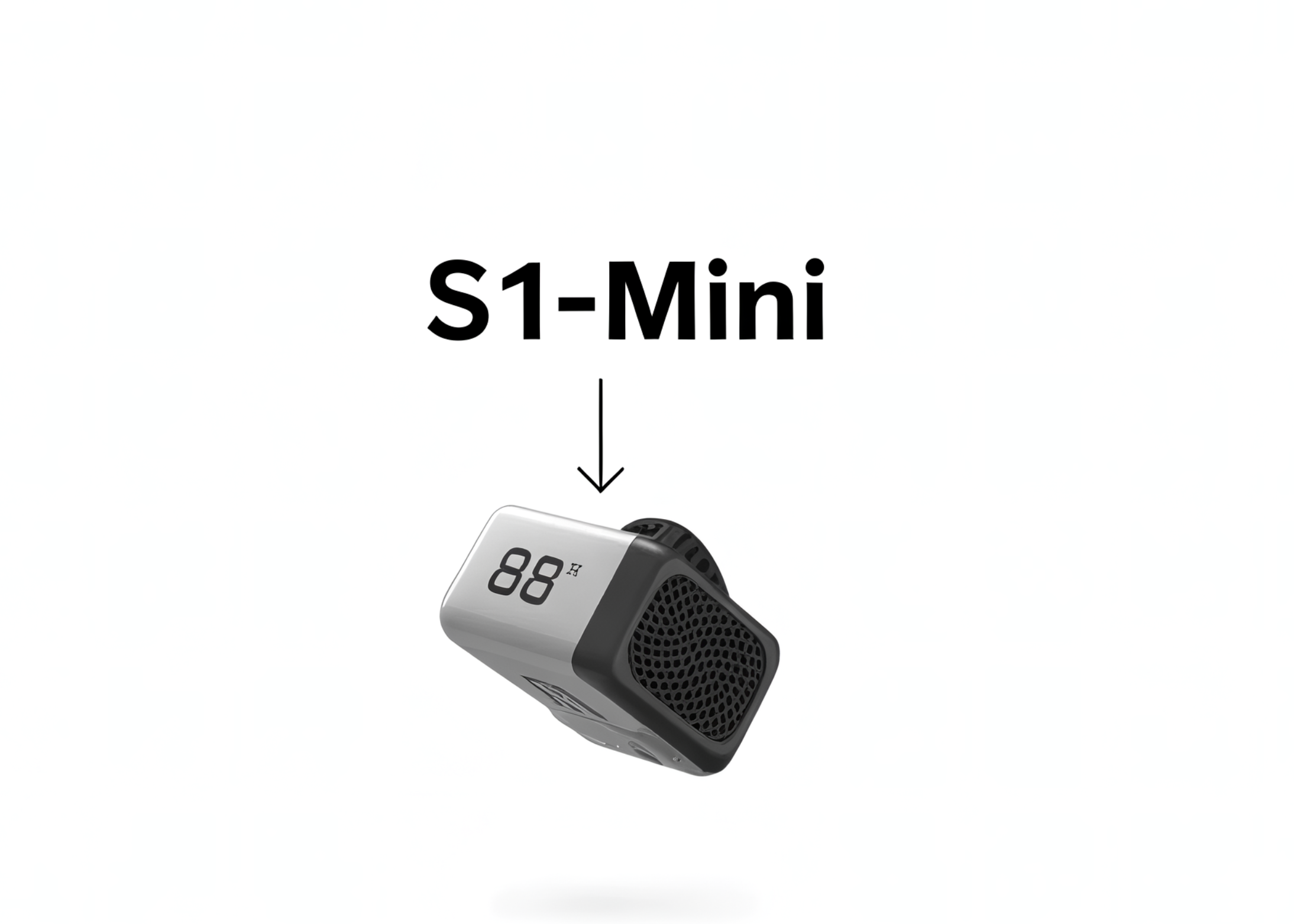
Superwhisper, a company specializing in speech-to-text and text normalization technologies, has launched S1-mini, an open-weights text normalizer designed to transform raw automatic speech recognition (ASR) transcripts into polished written text. The model, available on Hugging Face under an Apache 2.0 license with a naming clause, operates as a text normalizer rather than a transcriber or chat model. It is intended to be used after ASR systems, such as Whisper or Parakeet, to refine raw transcripts by removing filler words, resolving self-corrections, applying punctuation and capitalization, and converting spoken numbers, dates, and email addresses into written form. S1-mini is fine-tuned from Qwen/Qwen3-0.6B and has 596M unique parameters, with 28 layers and support for GQA. The model is limited to English in its first release and requires a fixed system prompt, a control line, and a raw transcript for input. It supports four styling options, two structural formats, and two contextual settings, with all combinations trained. Superwhisper reports a token accuracy of 94.8% on a held-out set of 7,519 cases, with a text-edit error rate of 11.6%. The model also performs well in email formatting, identifying greeting lines 99.3% of the time and sign-offs 97.9% of the time. It matches the correct output structure 97.6% of the time and generates exact email addresses in 92% of cases. The model is constrained in its functionality, as it does not add content, correct facts, or rewrite dialect. It also returns an empty string for filler-only input. S1-mini requires specific configuration settings, including disabling thinking mode and decoding greedily, to ensure optimal performance. The model is part of the S1 family, which includes S1-Voice, a cloud-based speech-to-text model, and S1-Language, an instruction-following model for cleanup and formatting. S1-Voice achieves transcription speeds up to 46 times faster than speaking time, with a word error rate of 6.8% across eight datasets, including LibriSpeech, where it drops to 2.2%. S1-Language is available alongside models from Anthropic, OpenAI, and Groq in the model picker. Superwhisper also highlights the importance of using the correct input format and configuration to avoid output degradation or garbling. The company encourages users to explore the model weights and technical details for further insights.
Binance, the world's largest cryptocurrency exchange with over 300 million registered users, has introduced a new platform called Agent OS that allows AI agents to analyze financial markets and execute trades on behalf of users. The platform integrates Binance's existing tools, including APIs, wallet services, and the Model Context Protocol (MCP), and supports AI applications such as OpenAI's ChatGPT and Codex, Anthropic's Claude Code, and Cursor. Users retain control over what AI agents can access and do, with granular permissions and subaccounts acting as a safeguard for funds. Jeff Li, Binance's vice president of product, emphasized that users have the power to set limits and manage access, with subaccounts defaulting to blocked withdrawals to create a sandbox environment for agent activity. Binance does not impose a separate trading cap on AI agents, meaning the amount transferred into a subaccount serves as the limit. The platform also enables AI agents to interact with payments and on-chain activities through Binance's x402 integration and Agentic Wallet, with daily transaction limits set by the company. Binance is not alone in this initiative, as other exchanges like Kraken, Coinbase, and OKX have also launched similar platforms for AI agents. The move marks Binance's first step toward creating a broader ecosystem for AI-powered applications across crypto and traditional markets.
Slack has announced the launch of Slack Code, a new feature that enables teams to collaborate on coding tasks using AI agents. The platform introduces dedicated channels where users can work together with AI assistants such as Anthropic's Claude or Cognition's Devin. These channels are designed to streamline the coding process by eliminating the need to switch between multiple tools and conversations. The feature includes open, project-specific code channels with dedicated user tabs, as well as tools that compare coding changes and preview HTML output before a project is finalized. Slack described the functionality as allowing users to tag in a coding agent when they have an idea or need to build a new feature, update a web page, or fix a bug. The agent then creates a code channel to handle the task. The release of Slack Code marks a significant step in integrating AI into collaborative workflows, offering developers a more unified environment for coding and project management.
Google announced a range of new AI-powered study tools integrated into its Search and Gemini platforms, aiming to position Gemini as a go-to AI assistant for students. The tools include interactive visuals, 3D simulations, a dedicated student hub, and customized practice quizzes. These features are part of Google’s broader strategy to compete with companies like OpenAI and education startups such as Knowt and Gauth, which also offer learning tools. On Search, students can now generate interactive visuals to understand complex topics, such as the pH scale, and ask follow-up questions to get tailored AI responses. The platform also allows users to create customized quizzes on various subjects, including science, math, and humanities. In the coming weeks, Lens will introduce an interactive learning experience where students can upload photos of their work to get AI explanations and guidance. Additionally, students can use Search to generate study documents from uploaded files like PDFs and handwritten notes. Gemini will also offer multi-step research reports and 3D simulations to help users visualize topics like DNA structure. A dedicated hub within the Gemini app will centralize all learning tools, enabling users to create study notebooks, flashcards, and take practice quizzes.
OpenAI has introduced a new Apple Messages plug-in for ChatGPT, enabling users to connect their Messages inbox with the chatbot. This integration allows users to sort, analyze, and edit their messages directly through ChatGPT, with additional support for Codex and ChatGPT Work for professional use. The plug-in also lets users request follow-up messages, delete messages, draft and send messages on their behalf, or search through their message history. OpenAI emphasized that the plug-in operates locally on the user’s device and does not create an index of all messages, though the specifics of this claim remain unclear. The company also advises users to monitor ChatGPT’s actions and avoid enabling persistent approval, which would remove the final review step before sending messages. In a separate development, a flash sale is currently offering $100 off Disrupt 2026 tickets, with a $300 discount available for a limited time. TechCrunch has contacted OpenAI for further clarification on the privacy implications of the new feature.
Google is set to launch a new feature for its Discover feed, allowing users to personalize their content recommendations through an AI chatbot interface. The update, which is expected to roll out in the coming days via the Google app, will let users describe their preferences, which the AI will then use to adjust the feed accordingly. The feature will also remember these preferences for future visits. Users can access the option through the three-dot menu within the Discover feed. As demonstrated in a video shared by Google, the chatbot-style interface will prompt users to describe their interests, confirm their choices, and outline the types of content it will prioritize. Users also have the ability to provide additional information if the initial input is not fully understood. The update marks a significant step in Google's efforts to enhance user experience through AI-driven personalization. Read the full story at The Verge.
Google has introduced a new feature aimed at helping publishers who have suffered from a decline in website traffic due to AI-driven search changes. The tool allows readers to mark a publisher's website as a 'favorite source,' which will then be highlighted more frequently in Google Search, Discover, and Google News. This interactive 'Preferred Sources' button is now available for publishers to embed on their own websites. The initiative follows the rollout of Preferred Sources in May, initially integrated into Google's AI experiences such as AI Mode and AI Overviews. The feature enables users to select over 345,000 unique sources since its launch. Publishers can add their sites as preferred sources by visiting Google's source preferences page and searching by name or website. Google claims that becoming a preferred source can increase click-through rates by up to twice. In addition to the new button, Google is introducing a feature that allows users to customize their Discover feed by specifying topics they want to see more or less of using natural language commands. Android users will also be able to personalize their audio daily briefings in the Google News app. Google is not alone in this approach, as several social media platforms have recently launched user-controlled algorithms for content customization. The move is part of Google's effort to mitigate the impact of AI-powered search features on traffic-dependent businesses.