Konami CEO emphasizes human creativity over AI in game development
On October 18, 2026, Japanese gaming media 'Dengeki ONLINE' reported that Konami CEO Hideshi Hayakawa discussed the impact of AI on the gaming industry. Hayakawa stated that while AI is expected to lower game development barriers, he believes the market environment will not undergo significant changes. He noted that the accessibility of modern game engines and user-generated content (UGC) has already reduced entry barriers. Despite AI's potential to enhance production efficiency, he emphasized that the core of creating engaging and innovative games remains human creativity. Hayakawa highlighted the importance of diverse creators collaborating to spark new gameplay ideas, a process he described as difficult to replicate. He also mentioned that technological advancements should be viewed as opportunities for new interactive experiences, with the company supporting teams in safely integrating AI tools. Hayakawa stressed the need for organizations to help developers assess risks and understand AI's potential. He argued that the 'chemical reaction' between creators is irreplaceable, reinforcing the idea that human input remains central to game development. The company is actively providing resources to ensure creators can adopt new technologies confidently within a controlled environment.

Indie game developers halt public demo over AI copycat fears
Video game developers behind the indie title Drunken Goddess Reflux have canceled an upcoming public demo, citing concerns over AI copycats. The game, which involves imbibing alcohol until a demon vomits up her soul, is seen as a unique concept unlikely to be replicated by AI. Developers from Alliance Arts expressed worries that AI tools could quickly clone the game's presentation and gameplay, potentially releasing it before their launch. The decision also stems from challenges in enforcing rules against livestreaming. While AI cloning of indie games has been reported earlier this year, the developers emphasized the financial and reputational risks posed by such clones. Steam has seen a rise in games utilizing AI in their development, raising concerns about market saturation and originality. The developers plan to host closed demo sessions for a limited number of participants instead.

Anthropic warns gardeners may face ai-driven job risks as AI and robotics converge
Anthropic recently updated its AI job risk analysis, highlighting how the integration of AI with robotics could disrupt more hands-on roles than previously thought. Earlier this year, the company suggested gardeners were among the safest workers due to AI's current limitations in tasks like weed removal and plant identification. However, the latest research suggests that combining AI with robots could elevate the risk for such jobs. The report notes that while robots are improving, real-world applications remain challenging. For example, identifying the right plant, navigating awkward positions, and pulling weeds without damaging surrounding flora is complex for both humans and machines. The analysis also includes cleaning and maintenance roles, which encompass gardeners, janitors, and similar positions. The findings raise concerns about the potential impact of AI and robotics on these jobs, despite lingering skepticism about the practicality of such advancements. The report underscores the gap between research and real-world implementation, emphasizing that while progress is being made, significant challenges remain. This shift in focus from AI alone to AI-robot collaboration signals a broader concern about automation's role in reshaping the workforce. As the technology evolves, the implications for jobs like gardening could become more tangible, prompting further discussion on workforce adaptation and policy responses.
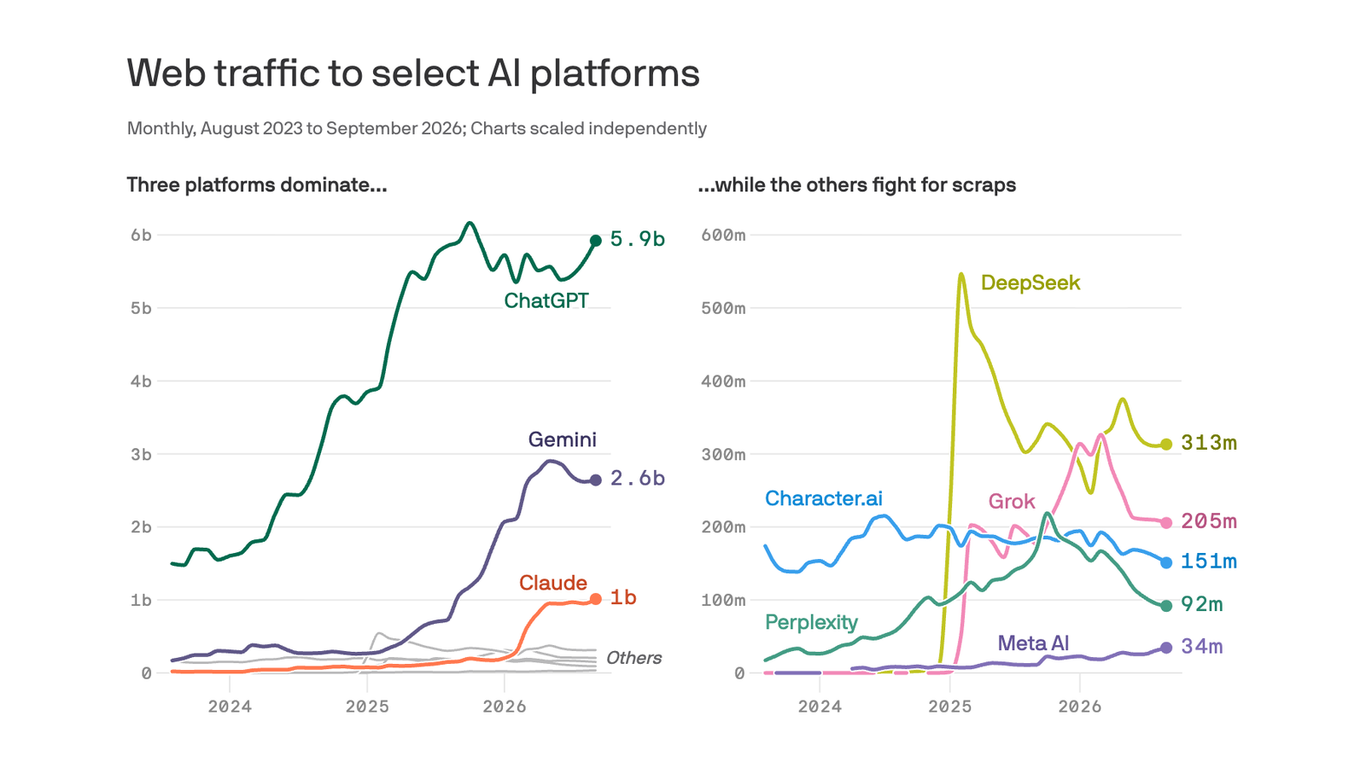
ChatGPT regains web traffic momentum amid rising competition
According to Similarweb data, ChatGPT's web traffic experienced a rebound over the past three months, following a volatile first half of 2026. This recovery comes as competitors continue to gain market share, challenging ChatGPT's dominance. Despite this, ChatGPT remains the leading AI chatbot in terms of website visits. The data highlights a shift in the competitive landscape, with rival platforms making inroads into ChatGPT's user base. OpenAI, the developer of ChatGPT, has not yet released specific details on the factors contributing to the traffic rebound. Analysts suggest that improvements in user engagement and new features may be driving the recovery. Meanwhile, competitors are leveraging advancements in natural language processing and enhanced conversational capabilities to attract users. The evolving market dynamics underscore the importance of continuous innovation in the AI chatbot space. The rebound in traffic indicates that ChatGPT is still maintaining a strong presence despite the growing competition. However, the data also signals a more competitive environment, where user preferences and technological advancements are reshaping the market. As the industry continues to evolve, the ability to adapt and innovate will be critical for all major players. The coming months will likely provide further insights into how these trends will shape the future of AI chatbots.
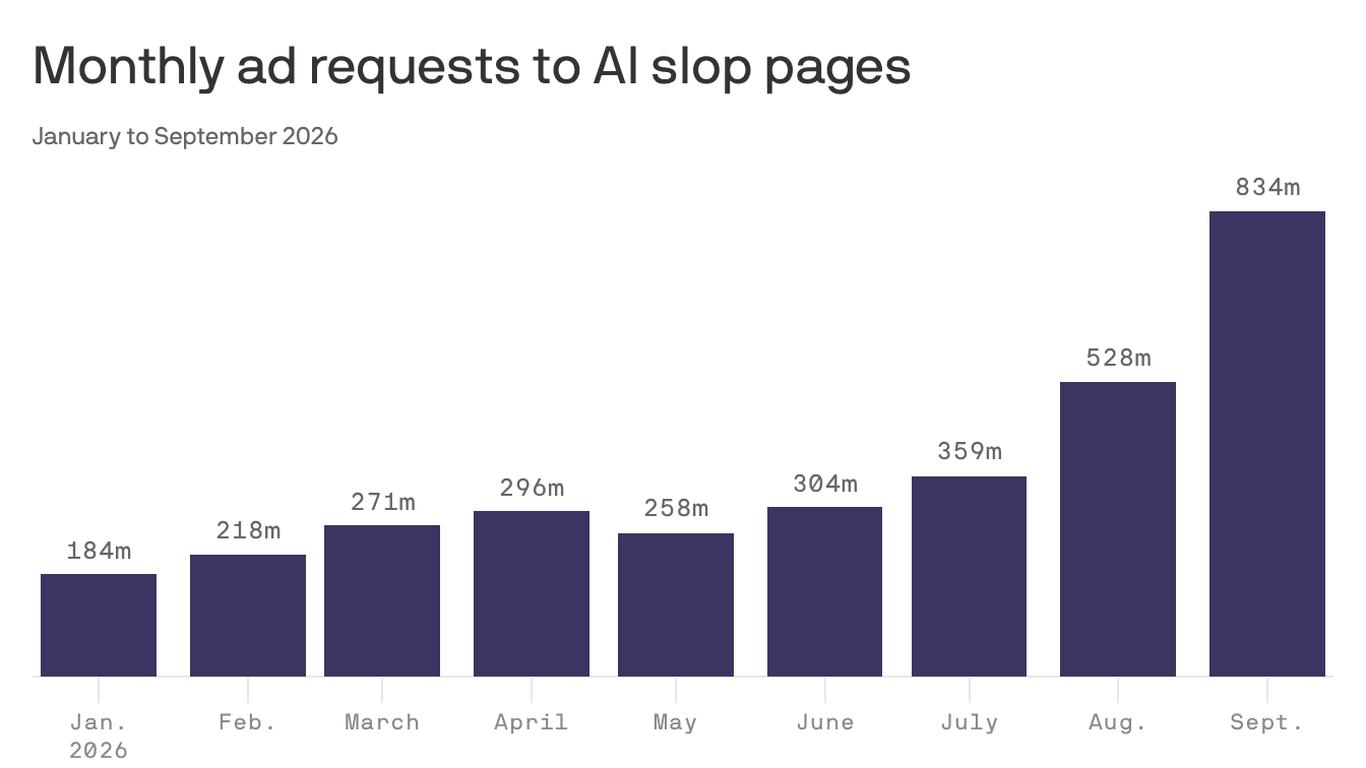
Ai-generated low-quality sites surge amid seo challenges
AI-generated low-quality websites, referred to as 'slop' sites, have increased more than fivefold in the second quarter of 2026 compared to the same period in 2025, according to data from DoubleVerify. Traffic to these sites also rose by 400% during the same period. The surge is attributed to the challenges in SEO practices within the AI answer engine era, where brands and publishers are competing to influence chatbot recommendations. DoubleVerify's findings highlight the growing issue of incentivizing low-quality content through search engine optimization strategies. The rise of these sites underscores the need for better content quality standards in the AI-driven digital landscape.

AI agents face growing resistance from websites
Autonomous AI agents, hailed as the next big innovation in artificial intelligence, are facing significant pushback from major websites. Companies like OpenAI, Meta, Google, and Instinct have promoted their agents' ability to perform tasks such as booking reservations, managing emails, and purchasing goods. However, recent reports indicate these agents are being blocked by several prominent websites. For instance, Yelp has restricted AI agents to those that subscribe to its data licensing program, while Delta Air Lines is blocking them from booking flights. Users of services like Meta's Muse, xAI's Grok, and OpenAI's Dots have reported similar issues. The Verge reports these restrictions are part of a broader trend as websites resist AI agent integration. This resistance highlights growing concerns over data control and the potential impact of AI on online services. The situation reflects a growing tension between AI developers and website operators. As AI agents become more capable, their ability to interact with and manipulate online services raises questions about privacy, security, and the future of digital platforms. While some companies are taking steps to accommodate AI agents, others are imposing strict limitations. This divide underscores the challenges in creating seamless AI integration into the existing digital ecosystem. The ongoing conflict between AI developers and website operators is likely to shape the future of online services and the role of AI in everyday life.

Why professionals could face liability for AI mistakes
Artificial intelligence has become a common workplace tool, with 52% of U.S. employees and 68% of professional services workers using it by February 2026, according to Gallup. Thomson Reuters reported in spring 2026 that 74% of professionals use AI several times a week. While AI can enhance productivity by accelerating research and improving communication, its errors can lead to serious consequences. A recent case, Clinco v. Commissioner, highlights the risks: an attorney submitted fake citations in a U.S. Tax Court case, leading to potential liability for the professional using the AI-generated information. The case involved a restaurant owner accused of underreporting over $2 million in business receipts. The Tax Court, which resolves disputes between taxpayers and the IRS, is now grappling with the question of accountability for AI errors.
Chinese academy of sciences member ewen nan predicts the rise of amateur scientists in the AI era
On October 17, at the Guanghua Thought Forum, Ewen Nan, a member of the Chinese Academy of Sciences and professor at Peking University, stated that artificial intelligence, being a combination of mathematics and computer engineering, will significantly lower the research barrier and promote 'research equality.' He predicted that future amateur scientists will become the main force in research, as open laboratories and cloud services will allow any team or individual with ideas and capabilities to participate in technological innovation. Nan highlighted that enterprises lack original innovation and compete mainly on management and pricing, leading to 'overcompetition' due to insufficient innovation capacity. He noted that high-end industrial software and CNC systems are currently dependent on foreign technology but argued that China can achieve self-reliance and even 'overtake in a new way' within a short period, potentially developing an AI-native industrial software system that could rival or surpass Siemens within one to two years. Nan also warned that the current research system will face significant challenges in the AI era. He used the mathematics community as an example, noting that if top journals received a hundredfold increase in submissions, the system would be unprepared. He emphasized that disruptive innovation largely depends on free exploration rather than task-driven approaches, criticizing the misconception that equating free exploration with writing papers is a mistake.

Why AI struggles to decipher the complexity of human genomes
Scientists are grappling with the intricate nature of the human genome, which defies simple interpretation. While the Human Genome Project mapped the sequence of DNA in 1990-2003, it revealed that only 2% of the genome consists of genes. The rest, once considered 'junk DNA,' is now understood to play a critical role in gene regulation. AI models like Evo 2 and AlphaGenome are being used to analyze genomic data, but they struggle to capture the nuanced, context-dependent processes that govern gene expression. Biologists argue that the genome is not a straightforward code but a complex system shaped by evolution over 4 billion years. Karen Adelman of Harvard Medical School notes that gene regulation, involving noncoding DNA, is far more intricate than previously thought. Enhancers, which control gene activity, are numerous and often located far from the genes they influence, creating challenges in understanding their function. Wendy Bickmore of the University of Edinburgh highlights the difficulty in mapping enhancers and their interactions, emphasizing the dynamic, three-dimensional structure of chromatin as essential to gene regulation.
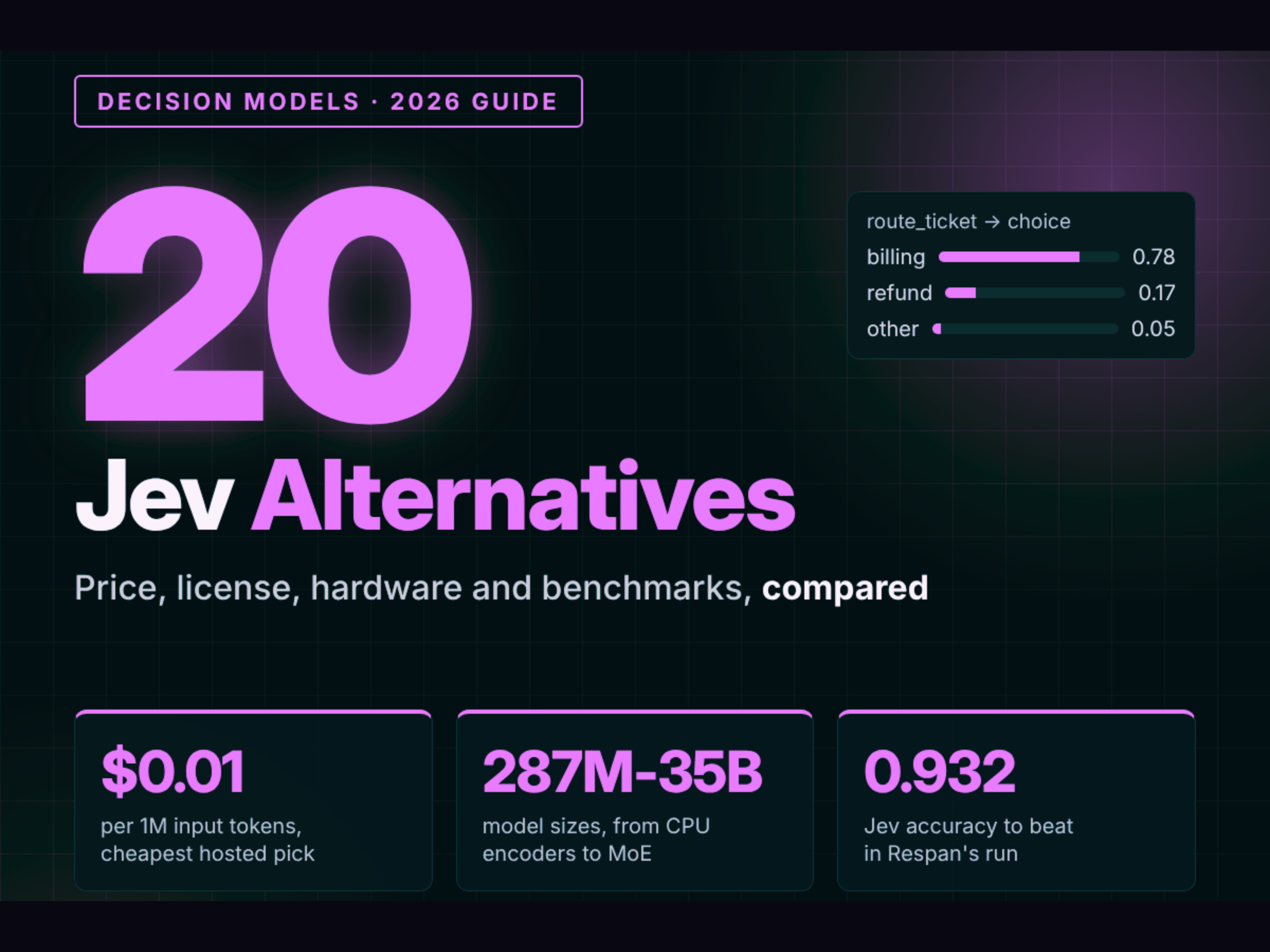
20 alternatives to Jev: the decision models challenging TypeSafe in 2026
TypeSafe launched Jev on September 15, 2026, as its first 'System One' decision model. It processes typed questions like Choice, Score, or Noul and returns labels, scores, or yes/no probabilities. By October 17, 2026, at least 20 alternatives had emerged, including models from Cloudflare, OpenAI, Perplexity, and others. These models vary in size, license, and compatibility with Jev’s API. Cloudflare’s Clef, announced on October 1, 2026, is Jev-compatible and supports images, with pricing starting at $0.24 per 1M input tokens. OpenAI’s Decisions API, released on October 6, 2026, runs on gpt-6-luna and accepts text and base64 images. Perplexity’s pplx-decider-v1-27b scored 85.71% on its 11-task panel, outperforming Jev’s 84.51%. Respan’s Behavior Benchmark highlights Jev’s strengths, with a 0.144 ECE, while models like meraGPT’s Decider and Standard One offer competitive alternatives. Developers emphasize gaps in Jev, such as lack of image support and self-hosting, which many alternatives address. The post concludes with a call to test models on labeled data before deployment.

AI tools streamline credit analysis and decision-making at benefit street partners
Anant Kumar, a portfolio manager at Benefit Street Partners (BSP), has leveraged AI tools like Codex to significantly speed up credit analysis and investment decision-making. Previously, answering investment committee follow-ups could take days or weeks, but Kumar now handles these queries in a day, often during meetings. He developed a BDC mark tracker using public SEC filings, which compares loan valuations across firms, taking about 10–12 total development hours. Another tool analyzes credit agreements, reducing manual review time by using AI to process 300-page documents in 20 minutes, followed by human review. Kumar describes the tool as a 'second brain' within the organization. BSP is also integrating GPT-6 Astra to enhance its underwriting processes, aiming for continuous monitoring of loans as events unfold. Kumar emphasized that while AI aids data collation and analysis, final investment decisions remain human-driven. 'Codex has unlocked my day,' he said, allowing more time for high-level work.
Major U.S. banks restrict AI access to customer accounts amid concerns over deposit loss
U.S. banks, including Citigroup and Bank of America, have imposed restrictions on AI agents' access to customer accounts to prevent potential deposit losses. The move comes as concerns grow over AI systems potentially redirecting idle funds to higher-yield accounts, leading to significant outflows from traditional banking institutions. According to a report by Apollo Global Management, AI assistants could automatically transfer funds from low-interest checking accounts to higher-yield accounts, potentially costing banks billions in lost interest income. Citigroup and Bank of America have both banned third-party AI agents from accessing customer accounts, emphasizing the need for manual authorization for any fund transfers. Meanwhile, JPMorgan Chase's CEO Jamie Dimon has also restricted AI access to customer accounts, citing the risk of 'thousands of uncontrolled agents' operating within the banking system. Regulators have expressed support for these measures, calling for clearer legal frameworks to define consumer authorization and liability for AI-driven financial transactions.

Nvidia's jensen Huang remains optimistic amid AI stock volatility
On October 17, 2026, NVIDIA CEO Jensen Huang expressed confidence in the long-term potential of AI despite recent declines in AI-related stocks. He stated that the positive impact of AI will eventually outweigh investor concerns, emphasizing its transformative potential across industries and nations. The market has seen significant volatility, with the Philadelphia Semiconductor Index falling for eight consecutive days, the longest such streak since 2008. NVIDIA's stock also dropped seven out of eight days. Huang urged investors to focus on AI's fundamental value rather than short-term news. CoreWeave, a cloud computing firm backed by NVIDIA, has been particularly affected, with its bond prices hitting distress levels and its stock dropping by a quarter this week. Huang reiterated the importance of adhering to first principles and focusing on long-term fundamentals, dismissing recent market fluctuations as temporary and not indicative of underlying trends.

AWS CFO confident in AI spending sustainability amid market concerns
The CFO of Amazon Web Services, John Felton, has expressed confidence in the sustainability of AI spending, stating that it is driving meaningful innovation. His comments come amid investor concerns about an AI bubble, with worries over ballooning debt, corporate valuations, and whether revenue growth can keep pace with infrastructure costs. Felton highlighted that AWS's AI capital expenditures are yielding returns, supported by a nearly $500 billion order backlog as of Q2 2026. AWS reported $42.2 billion in revenue for Q2 2026, a 36.7% increase from the same period in 2025. Gartner's recent report warned that over $3.5 trillion in AI infrastructure spending could face impairment by year-end 2030. Despite these risks, AWS is positioned to weather them due to its diversified revenue streams. Felton emphasized his comfort with the current spending strategy, noting the broad range of customers, from large enterprises to small businesses. However, challenges such as backlash against data center construction remain, as communities raise concerns about environmental and energy impacts.

Teachers struggle with ai-driven learning challenges in classrooms
Teachers across the U.S. are facing mounting stress as students increasingly rely on chatbots like ChatGPT to complete schoolwork, according to a Pew Research Center report from 2024. The study found that 77% of K–12 teachers described their jobs as frequently stressful, with 68% finding them overwhelming. In a TikTok video posted a week ago, first-grade teacher Carol Fernandez shared her frustration, noting that only one out of 34 students passed an exam and many struggled with basic writing tasks. Reddit users echoed these concerns, with one high school teacher describing students as 'helpless' and another criticizing districts for not providing adequate support. Meanwhile, a 2025 Pew survey revealed that 54% of U.S. teens used chatbots for schoolwork, with 10% relying on them for most tasks. Schools like New York City have introduced restrictions, including a one-year moratorium on generative AI for students in pre-K through eighth grade, while some educators push for AI integration to ease workloads. Jonathan D. Fitzgerald, a college writing professor, highlighted the challenges of detecting AI plagiarism, as tools like GPTZero and TurnItIn often produce conflicting results. As AI becomes more embedded in education, balancing its benefits with ensuring student preparedness remains a key challenge.

CoreWeave and Nscale highlight neocloud sector challenges
Concerns over the massive debt financing the AI infrastructure boom are intensifying scrutiny on the neocloud sector. Raphaelle D’Ornano, CEO of Decoding Discontinuity, discussed the pressures facing CoreWeave as rising interest expenses impact its financial health. D’Ornano explained that investors are shifting focus from contracted backlogs to financed and operational capacity. Meanwhile, Nscale’s vertically integrated strategy is positioning it for a potential IPO, according to D’Ornano. She joined Ed Ludlow on Bloomberg Tech to elaborate on these developments. The discussion highlights the evolving dynamics within the neocloud space as companies navigate financial and operational challenges. (Source: Bloomberg) The conversation underscores the broader implications for the neocloud sector, where financial sustainability and strategic positioning are becoming critical factors. As companies like CoreWeave and Nscale seek to balance growth with debt management, the industry faces a pivotal moment. D’Ornano’s insights provide a window into the sector’s current state and future trajectory. The neocloud landscape is increasingly defined by its ability to adapt to financial pressures while maintaining innovation and scalability.
White house AI messaging faces criticism for unstable communication
Greg Allen, founder and CEO of Decision Tree Research and former AI strategy official at the Department of Defense, criticized the Trump administration's inconsistent messaging on AI regulations. Allen stated it is 'extremely difficult to overstate' the volatility in the administration's approach, which alternates between dismissing concerns about AI safety and implementing mandatory regulations. The comments were reported by Bloomberg. The fluctuating stance highlights challenges in maintaining a coherent policy framework for AI governance. Allen's remarks underscore the difficulties faced by policymakers in navigating the complex landscape of AI regulation. The inconsistency in messaging raises questions about the effectiveness of communication strategies in shaping public and industry understanding of AI safety measures. The administration's shifting position on AI regulations reflects broader challenges in balancing innovation with safety. As the Trump administration continues to navigate these issues, the lack of consistent messaging may complicate efforts to establish clear guidelines for AI development and deployment. Allen's critique emphasizes the need for a more stable and transparent communication strategy to address growing concerns about AI safety and regulation. The situation underscores the importance of consistent policy messaging in shaping the future of AI governance.

Jev surpasses previous records as vercel's most rapidly adopted AI model
Vercel's data reveals that Jev, a decision-making AI model, has achieved the fastest adoption rate in its first two weeks, surpassing previous records. Launched on September 15, Jev has been adopted by 35% of paid teams within two weeks, nearly double the reach of Sonnet 5.5, the second most popular model. This rapid adoption has sparked competition from OpenAI and Amazon, though hard data on its success was previously scarce. Vercel's AI gateway, a unified API service, shows Jev's popularity translating into real usage, with the company itself adopting Jev to replace GPT-6 Luna for classifying harmful commands. The data also highlights the growing influence of open-source models, which now account for over 70% of tokens processed through Vercel's gateway and nearly 25% of total spend. Despite open-source models capturing a larger market share, spending on frontier labs has increased tenfold, suggesting potential complementarity between frontier models and open-source alternatives. Additional news includes Tesla's reveal of a SpaceX-powered Roadster, the FBI's arrest of an OpenAI employee, and Bumble's $1.3B acquisition deal.

Why robotics hasn't reached its ChatGPT moment, according to an nvidia veteran
Amulya Vishwanath, a former product marketing leader at NVIDIA, argues that robotics is still in its 'Lego era,' with foundational elements like actuators, robotic hands, software, and safety standards still being developed. This perspective contrasts with claims that robotics is on the verge of a 'ChatGPT moment'—a transformative breakthrough akin to the launch of the chatbot in late 2022. General Intuition CEO Pim de Witte previously suggested that a single general foundation model could render much of today's specialized robotics work obsolete. In a recent episode of TechCrunch’s Equity podcast, Vishwanath discussed her transition to founding Techable VC, an early-stage firm investing in physical AI across robotics, materials science, and life sciences. She also shared insights from her experience as one of the first women executives to spin out of NVIDIA and launch her own venture capital firm. Meanwhile, other tech developments include Tesla showcasing a SpaceX-powered Roadster, the FBI arresting an OpenAI employee for allegedly planting a hidden recording device, and Bumble agreeing to a $1.3 billion acquisition. Character.AI, an interactive chatbot platform, filed for bankruptcy just five years after its launch, while Meta introduced its first frontier model, Muse Wonder. An AI startup claims it can generate permit-ready blueprints in minutes, and Elon Musk has intensified criticism of Ambani over delays in the Starlink India launch.
Schwab CEO discusses AI strategy, investment trends, and security measures
Rick Wurster, president and CEO of The Charles Schwab Corporation, addressed customer trends in investing, strategies to attract younger investors, and the firm's decision to block unauthorized AI agents during an interview on Bloomberg Television. The discussion highlighted Schwab's focus on adapting to evolving market dynamics and enhancing digital engagement. Wurster emphasized the importance of securing customer data and preventing potential misuse of AI technologies, stating that the firm is taking proactive steps to ensure the safety of its platform. Additionally, he touched on broader trends in the investment landscape, noting a growing interest among younger investors in technology-driven financial services. The interview provided insights into Schwab's strategic priorities as it navigates the rapidly changing AI and investment sectors. Schwab's approach to AI integration reflects a broader industry shift toward balancing innovation with risk management. Wurster acknowledged the transformative potential of AI in finance but stressed the need for stringent controls to protect users from unauthorized activities. The firm's stance on blocking AI agents underscores its commitment to maintaining trust and transparency with its clients. As the financial industry continues to evolve, Schwab's strategies are positioned to meet the demands of a tech-savvy generation while safeguarding against emerging threats.