Microsoft abandons AI partnership with Nscale, hitting a major setback
Microsoft has terminated its partnership with Nscale, a UK-based data center company, dealing a significant blow to its planned IPO. The deal, which was part of a major project in Loughton, Essex, was one of the company's largest clients. The move comes as Nscale had recently filed for an IPO in the US, with Microsoft and Anthropic listed as its primary customers. The company provides essential infrastructure for AI training and operations, competing with firms like CoreWeave and Lambda. Nscale's contract value surged from $1 billion to over $1.03 trillion in just two and a half years, according to its IPO filing. Microsoft and Nscale have not yet commented on the reasons for the termination of the project.
AI investment risks surface as asia's tech sector faces financial pressures
A decline in U.S. tech stocks is exposing Asia's AI industry to rising financing costs, which could hinder spending and pressure earnings across a supply chain driving regional stock gains. The sector's sustainability is under scrutiny as companies face tighter credit and higher borrowing costs, prompting warnings from leaders about potential disruptions without adequate investment. Analysts stress cost control and efficient capital allocation as critical for navigating the evolving global market. Financial pressures are expected to impact the entire supply chain, from manufacturing to R&D, with cost management and innovation becoming key to success. The coming months will test Asia's AI industry's ability to sustain growth amid these challenges.

Asia's ai-driven startup funding hits second-highest level in q3 2026
Asia’s startup funding reached its second-highest level in years during the third quarter of 2026, with $38.5 billion invested across seed- through growth-stage companies. AI-focused ventures accounted for 55% of this, or $21 billion, reflecting a global trend. China led the region with $27 billion, or 70% of all funding, followed by India at $2.9 billion and Singapore at $2.5 billion. Moonshot AI, a Beijing-based foundational model company, raised $3.5 billion in July, while Kling AI, a spinout from Kuaishou Technology, secured $3 billion. Late-stage funding totaled $20 billion, nearly double year-ago levels, with Moonshot AI’s $3.5 billion Series F being the largest round. Early-stage investment, though down 28% from the prior quarter, hit a yearly high at $13.6 billion, with seed funding reaching a record $4.9 billion.
CoreWeave shares plunge amid rising debt concerns
CoreWeave's stock fell 20% in the first three trading sessions of this week, raising concerns about the company's financial health. The decline has intensified as investors worry about the company's growing debt burden. Nvidia's CEO, Jensen Huang, recently expressed confidence in CoreWeave, stating his belief in the company's potential. However, analysts remain skeptical about whether this support will be sufficient to stabilize the stock. Mandeep Singh of Bloomberg Intelligence provided additional insights into the market's reaction to the company's financial situation. The stock's sharp drop highlights the growing uncertainty surrounding CoreWeave's ability to manage its debt and maintain investor confidence. Investors are closely watching for any signs of improvement or further deterioration in the company's financial outlook. The market's response to CoreWeave's financial challenges underscores the broader concerns about corporate debt in the current economic climate. While Huang's endorsement may provide temporary optimism, the long-term viability of the company remains under scrutiny. Bloomberg Intelligence's analysis suggests that the stock's performance will depend on how effectively CoreWeave can address its financial issues and regain investor trust. As the situation unfolds, the company's ability to navigate its debt challenges will be a key factor in determining its future stock performance.
CoreWeave co-founders realize $3.3 billion in share sales amid AI market volatility
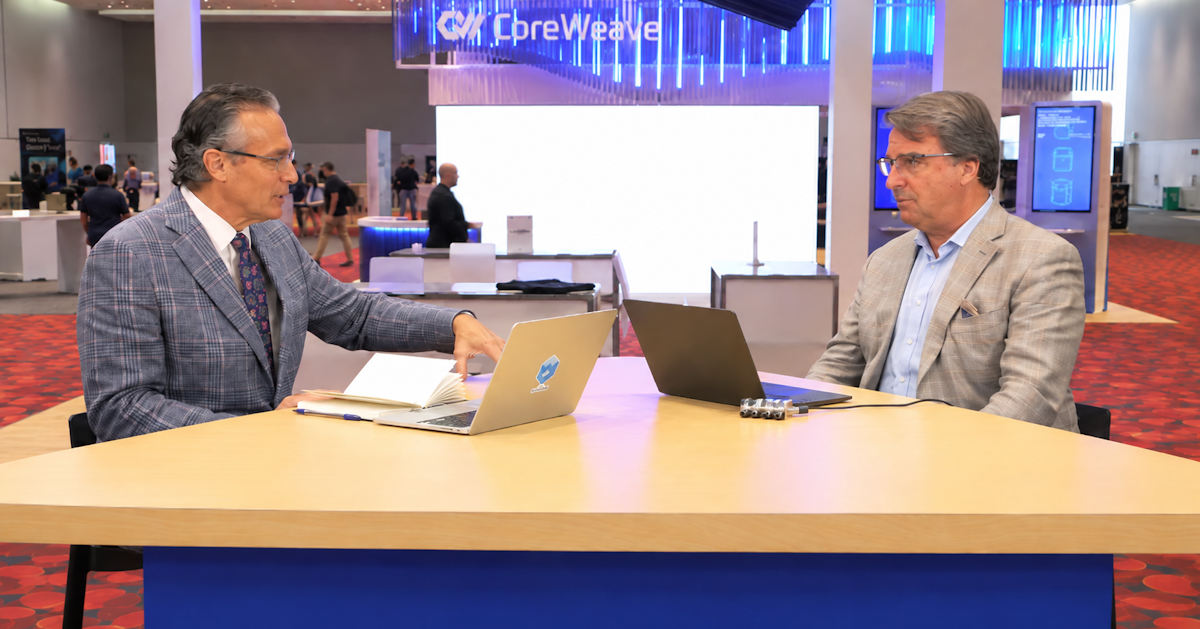
Three co-founders of CoreWeave Inc. have sold $3.3 billion in company shares since last year’s initial public offering, reflecting the impact of rising credit risks and investor caution around AI spending. This has contributed to increased volatility in the stock. Dan Ives, Partner at Yorkville & Ives, commented on the volatility within the AI sector, highlighting its implications for stocks like CoreWeave and Apple. Ives emphasized the current stage of the AI industry, comparing it to the 'third inning' of a game, suggesting it is still in an early phase of development. The market dynamics are being shaped by both macroeconomic factors and shifting investor sentiment toward AI-related investments. The recent share sales indicate a strategic move by CoreWeave’s co-founders to capitalize on market conditions while navigating the uncertainties of the AI sector.
Everwind invests over C$10 billion in nova scotia data center and wind power
EverWind Fuels Co. has announced a C$10 billion investment in a data center campus and wind generation infrastructure in Nova Scotia, marking the largest private investment in the province's history. The project includes a lease agreement with an AI developer, positioning Nova Scotia as a key player in the growing data center sector. The initiative is expected to significantly boost the region's renewable energy capacity and support the expansion of AI technologies. The company emphasized the strategic importance of the project, highlighting its potential to drive economic growth and sustainability. The investment is set to be completed by year-end, with the data center expected to contribute to the province's energy goals and technological advancement. The lease to the AI developer underscores the collaborative approach to developing the infrastructure, ensuring alignment with industry needs and future scalability.

Nscale faces construction delays as IT prepares for IPO
Artificial intelligence infrastructure company Nscale is planning to raise up to $3 billion through an initial public offering this month, amid growing investor caution regarding the risks of AI infrastructure expansion. The UK-based firm is encountering multiple challenges, including regulatory issues, a fire incident, and construction delays at its flagship data center in Norway. These setbacks have impacted its timeline for completing the project. Bloomberg reporter Paula Doenecke highlights the difficulties faced by Nscale as it navigates these obstacles ahead of its IPO. The firm's ability to meet its financial and operational goals will be closely watched by investors and industry observers. The situation underscores the complexities of scaling AI infrastructure in a competitive market. Nscale's progress will be a key indicator of the broader challenges facing the AI industry in 2026.
Nvidia partner criticizes CoreWeave’s bond yield as unreasonably high
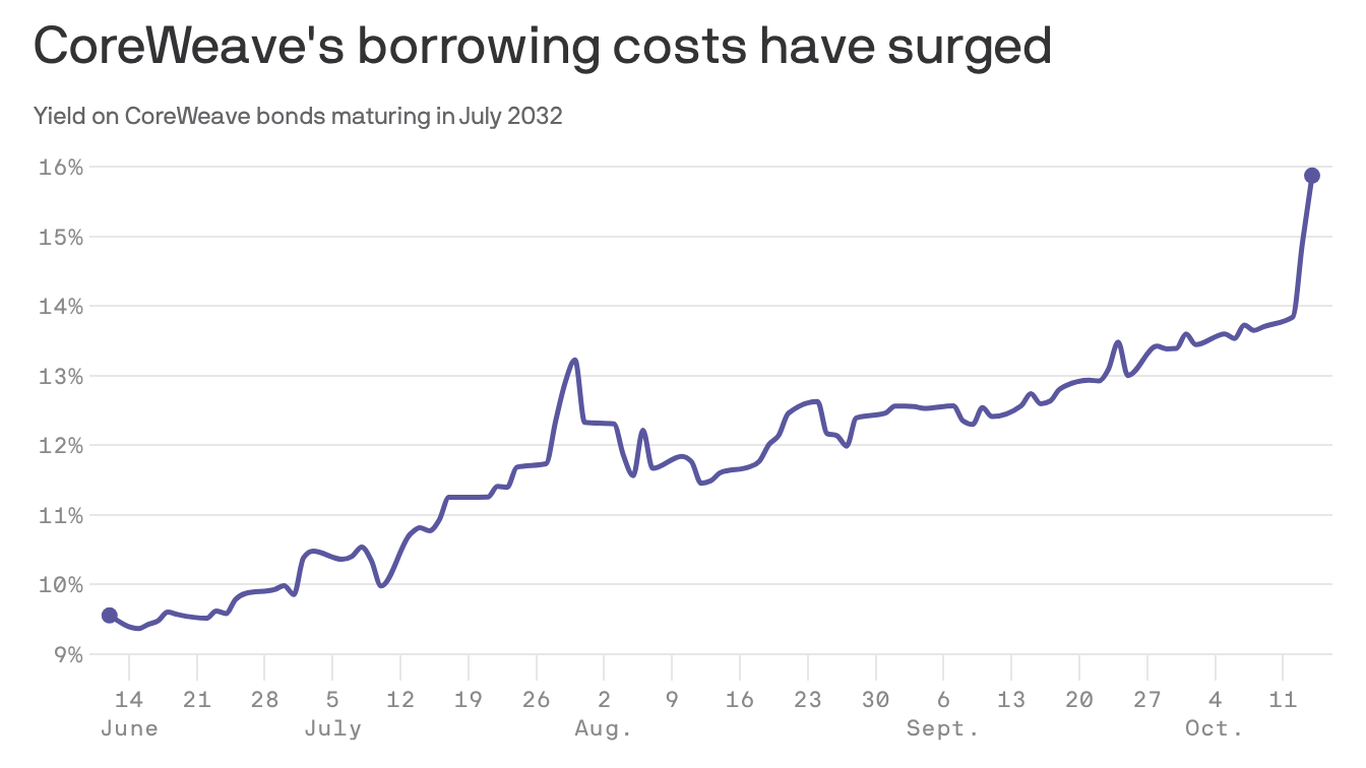
A partner of Nvidia, GMI Cloud, has criticized CoreWeave Inc.’s 15% bond yield as ‘insane,’ highlighting the stark contrast with the 3.45% rate secured by a similar cloud computing company on a recent Taiwan dollar loan. The comment comes amid ongoing market volatility for CoreWeave, which has faced declining stock and bond prices. CoreWeave CEO Mike Intrator previously defended the company’s business model, stating the market is acting ‘irrationally.’ The 15% yield on CoreWeave’s bonds significantly outpaces the 3.45% rate available to the competitor, raising questions about the company’s financial strategy and market perception. The disparity underscores growing skepticism about CoreWeave’s ability to sustain its current valuation and debt levels in a challenging economic environment.
Anthropic faces lowered valuation expectations amid slower revenue growth
Investors are reconsidering their valuation expectations for Anthropic ahead of its IPO, according to four sources. The company’s recent financial results, including a third-quarter revenue of $16.8 billion, have sparked mixed reactions. While the performance eased concerns about high AI development costs, the slower growth rate compared to previous quarters has disappointed some. The sources noted that during an investor event in San Francisco, discussions about a $1.5 trillion valuation took place, down from earlier projections of $2 trillion for an November IPO. Meanwhile, the broader AI market faces pressure amid a tech stock sell-off, with companies like CoreWeave seeing sharp declines in stock and bond prices. Anthropic disclosed that its 2025 revenue reached approximately $46 billion, but after accounting for liabilities, it still reported an operating loss exceeding $80 billion. The company also outlined a significant $420 billion loss for 2025 and warned of further investment needs for AI infrastructure. These figures come as the company aims to position AI as a transformative force, comparable to past technological revolutions.
Blackstone's strategic move in the AI sector
Blackstone has made a significant investment in the AI industry, spanning various sectors such as data centers, power and cooling, chip financing, and companies like OpenAI, Anthropic, and SpaceX. Bloomberg’s Preeti Singh highlights how Jon Gray, President and COO of Blackstone, identified the infrastructure opportunity early. Gray views AI as a major economic shift that investors should not overlook. In a segment on 'Bloomberg Tech,' Singh discusses Gray’s insights on the potential of AI. The investment strategy reflects Blackstone’s broad approach to capitalizing on the AI boom. The firm’s focus on infrastructure and key players in the AI ecosystem underscores its commitment to the long-term growth of the sector. This move positions Blackstone at the forefront of the AI revolution, leveraging its extensive resources to support innovation and expansion in the field.
Nvidia CEO dismisses need for financial support for CoreWeave
Nvidia Corp. CEO Jensen Huang has dismissed concerns about the financial stability of CoreWeave Inc., one of the company's major clients. Huang stated that he does not believe CoreWeave will require a financial bailout from Nvidia. The remarks come amid ongoing discussions about the AI data center operator's financial health. Huang's comments were made during a recent press briefing, where he emphasized Nvidia's confidence in CoreWeave's ability to navigate its current challenges. The CEO's stance contrasts with some industry observers who have raised concerns about CoreWeave's financial position. Despite the uncertainty, Huang remains optimistic about the company's prospects. His comments highlight the growing importance of CoreWeave in the AI data center sector and the potential implications for Nvidia's business strategy. The financial situation of CoreWeave has been a topic of discussion in recent months, with some analysts questioning its long-term viability. However, Huang has not provided specific details about the company's financial status or any potential support measures. His remarks suggest that Nvidia is positioning itself to weather any potential downturn in the sector. The CEO's confidence in CoreWeave's resilience underscores the strategic importance of the relationship between the two companies. As the AI industry continues to evolve, the outcome of CoreWeave's situation could have significant implications for the broader market.
AI market volatility spreads to corporate bonds
CoreWeave, a heavily indebted and cash-burning neocloud company, has become a focal point of corporate bond market volatility. Its bonds experienced their second consecutive day of selling on Wednesday, pushing yields above 15%. This decline in bond prices reflects growing investor concerns about the broader AI sector. John Atkins of PitchBook described CoreWeave as a bellwether for the riskier aspects of hyperscaler sentiment. The slump coincided with recent weakness in AI-related stocks, though the exact cause of Wednesday's selling remains unclear. Rising interest rates may have contributed to the pressure. CoreWeave CEO Michael Intrator acknowledged market misunderstandings in an internal memo but expressed confidence in the company's business model. The episode has unsettled investors about the sustainability of the AI boom. The market's reaction highlights the ongoing uncertainty surrounding AI investments, with CoreWeave serving as a canary in the coal mine for the sector. Despite the volatility, analysts note that market overshooting is common, but the current episode has raised questions about the long-term viability of AI-driven growth.

Stella & dot founder launches AI marketing startup Marklo with $5m seed funding
Jessica Herrin, founder of Stella & Dot, has launched Marklo, an AI marketing startup, with $5 million in seed funding. The company, based in Burlingame, California, helps brands plan marketing campaigns using sales, inventory, and past marketing data. Forerunner led the round, joined by Freestyle Capital and angel investors including former Klaviyo and current Shopify leaders. Marklo’s software identifies successful promotions, suggests products to promote, and drafts campaign briefs using AI. Over 100 brands, including Away and Latico Leathers, are already using the platform in a pilot. Herrin emphasized the need for broader context in marketing decisions, noting that traditional tools often lack this. She highlighted how Marklo integrates data from Shopify, Klaviyo, and other platforms to provide a unified view of sales and promotions. Herrin, who sold Stella & Dot after the pandemic disrupted its business model, aims to make Marklo accessible to small and medium brands. The company plans to charge a monthly subscription fee and will expand its customer support. Kirsten Green of Forerunner Ventures praised Herrin’s experience in building brands, which informs Marklo’s approach to helping brands make data-driven marketing decisions.

Cybersecurity funding surges in q3 2026, driven by AI investments
Global cybersecurity and privacy startups raised $6.8 billion in the third quarter of 2026, according to Crunchbase data, marking a 50% increase from the previous quarter and the highest quarterly total in years. The surge was driven by larger funding rounds rather than an increase in the number of deals. AI startups dominated the funding, with at least 18 companies securing $100 million or more in this quarter. Keyfactor, an enterprise identity security provider, led with a $1 billion round in July, while Island and Cyera each raised $400 million. Cyera also acquired Oasis Security for around $1 billion. Visa acquired BioCatch for $2.4 billion to enhance its fraud detection capabilities. Aura completed a $600 million acquisition of Qoria, renaming the company Aura. The funding environment remains robust despite a sluggish IPO market, reflecting growing concerns over AI-related cybersecurity risks.

Anthropic demonstrates ai's potential as a sustainable business model
Anthropic has presented a compelling case to Wall Street that frontier AI can be a sustainable business, amid concerns about an AI bubble. The company, which has been at the forefront of AI development, showcased a balance sheet indicating profitability, according to sources. Despite a 1% drop in the S&P 500, driven by AI-related concerns, Anthropic's financial disclosures highlight its cash flow positivity, even as major companies struggle with AI spending. The company's growth, however, appears to have slowed compared to the first-quarter surge. Analysts and investors have noted that Anthropic's early investments in coding expertise, business clients, and spending discipline have yielded returns. While the company has not resolved all financial challenges, its ability to sustain technological and financial advantages as it expands into new AI niches remains a key focus for observers.
Stack infrastructure seeks $6 billion loan amid AI sector challenges
Stack Infrastructure Inc., a data center company, is pursuing an A$8.6 billion ($6 billion) loan, according to a person familiar with the matter. This move represents a significant test of investor confidence in AI-related debt in the region, amid growing concerns over the sector's performance. The loan request comes as the AI industry faces a downturn, with recent market volatility impacting investor sentiment. The company's financial strategy highlights the broader challenges facing the sector, as companies seek to secure funding amid a selloff. The timing of the loan request underscores the precarious state of the AI market, with investors wary of overvaluation and uncertain returns. The situation reflects a broader trend of caution in the financial community, as the sector grapples with its future prospects.
ByteDance eyes mediatek's AI chips for data center expansion
ByteDance Ltd. is nearing a deal to acquire MediaTek Inc.'s data center semiconductors, a move that would provide critical components for TikTok’s parent company. The agreement is expected to bolster ByteDance’s capabilities in the AI-driven data center market while offering MediaTek a competitive edge against Qualcomm Inc. The potential acquisition comes amid heightened competition in the semiconductor industry, where AI chip demand is surging. MediaTek, a leading Taiwanese chipmaker, has been actively expanding its presence in the data center sector. The deal is seen as a strategic step for ByteDance to secure its supply chain amid growing reliance on AI technologies. Industry analysts suggest the transaction could reshape the landscape of AI chip manufacturing and deployment. The exact terms of the deal remain undisclosed, though sources indicate it is expected to close by year-end 2026.
Anthropic reports $16.8 billion revenue ahead of IPO plans
Anthropic PBC reported third-quarter revenue of $16.8 billion, according to individuals with knowledge of the matter. The artificial intelligence model developer is advancing its plans to go public. The company's strong financial performance highlights its growing influence in the AI sector. The figures reflect the company's progress as it prepares for its initial public offering. The revenue milestone underscores Anthropic's position in the competitive AI landscape. The announcement comes as the company continues to expand its operations and investment in AI research. The financial results are expected to play a key role in its upcoming IPO process. The company's success is seen as a sign of the broader AI industry's growth and potential. Anthropic's performance is being closely watched by investors and industry observers. The company's financial health is a critical factor in its public market readiness. The results signal confidence in Anthropic's business model and future prospects.

Modal's CEO highlights ai's transition to a new software era
Modal, an AI cloud startup, has raised $750 million, achieving a $15.75 billion post-money valuation. Erik Bernhardsson, CEO, highlighted the development of over 3 billion AI sandboxes and the rising need for inference and reinforcement learning capabilities. He emphasized the importance of secure virtual environments for AI agents to execute code and handle extended tasks. The discussion occurred during an interview with Ed Ludlow on Bloomberg Tech. The funding reflects growing interest in AI infrastructure as the technology advances. Bernhardsson’s insights underscore the shift toward more sophisticated AI systems requiring robust and secure environments, marking a significant step in AI’s evolution as a core software development component. The valuation and funding highlight confidence in Modal’s position within the AI landscape. With increasing AI application complexity, demand for secure and scalable infrastructure continues to rise. Bernhardsson’s comments align with broader industry trends, indicating a transition to a new era in software development driven by AI capabilities. The interview provides a glimpse into the future of AI, where agents will play a more prominent role in executing complex tasks. This development is part of a larger movement toward more advanced and secure AI systems. The funding round and strategic focus on sandboxes and secure environments position Modal as a key player in the evolving AI ecosystem.
CoreWeave CEO defends business model amid market volatility
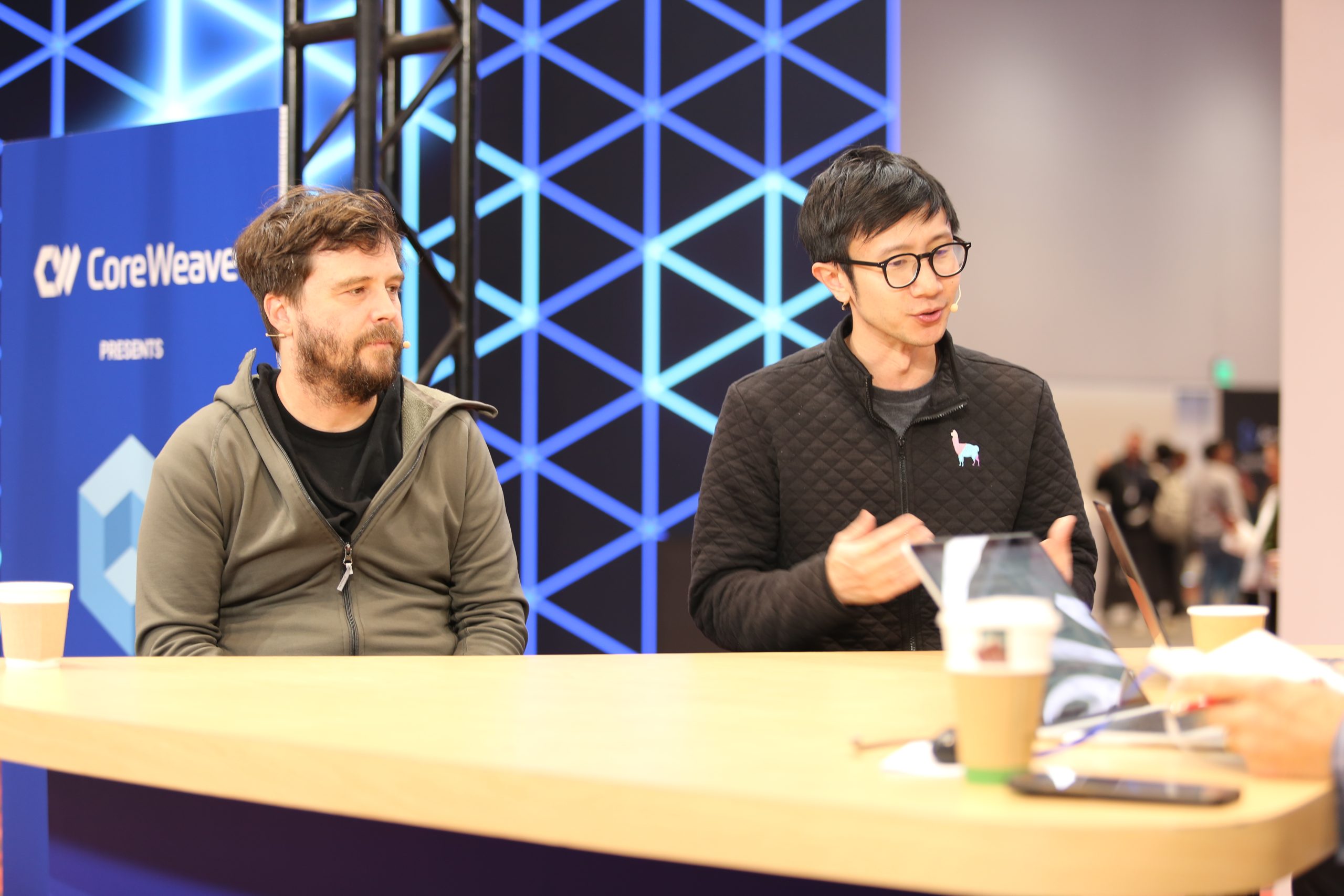
CoreWeave Inc. CEO Mike Intrator addressed recent market volatility, calling it 'irrational' amid a decline in the company’s stock and bond prices. Intrator emphasized his confidence in the AI cloud company’s business model, despite the financial downturn. The CEO’s comments come as the company faces pressure from investors and market fluctuations. The market downturn has led to a significant drop in CoreWeave’s stock and bond prices, raising concerns about the company’s financial stability. Intrator’s stance highlights the ongoing debate between market sentiment and long-term business viability. His remarks underscore the challenges faced by AI cloud companies in navigating current economic conditions. The CEO’s confidence in the business model reflects a broader industry trend of resilience amid uncertainty. CoreWeave’s situation is emblematic of the broader challenges facing the AI sector in 2026.