
Microsoft develops AI student simulators to enhance AI tutoring
Microsoft Research has unveiled StudentSim, an AI system designed to simulate students and improve AI tutoring without relying on large-scale human experiments. The system aims to address the challenge of assessing whether explanations, prompts, or questions truly help students progress. Traditional AI tutors often focus only on whether answers are correct, but effective teaching also depends on understanding, error correction, and personalized support. StudentSim uses anonymized learning data to create personalized AI student simulators, mimicking both independent problem-solving and responses to tutor guidance. The system was tested across three domains: chess, English writing, and mathematics, with results showing it outperformed existing models. Microsoft emphasized that StudentSim is not a classroom product and does not replace teachers, but rather provides early feedback for researchers before real-world testing. The system evaluates simulators using two metrics: behavioral fidelity and guidance responsiveness. In chess tutoring experiments, AI tutors trained with StudentSim feedback achieved a 90.5% accuracy rate, surpassing baseline models. Microsoft highlighted the system’s potential to offer scalable, cost-effective insights for AI education research.
Anthropic's report highlights AI efficiency gains and workforce shifts
Anthropic, an artificial intelligence company, released a report showing that its employees generate twice to four times more revenue per person than Meta and Google during their respective growth phases. The data, based on internal records up to April 2026, was adjusted for inflation compared to the financial reports of Meta and Google from five years ago. The report also noted a significant drop in junior programmer roles, with the percentage of junior technical staff falling from 21% to 14% since early 2025. The report highlights increased efficiency, with engineers producing five times more code after adopting coding agents. It also mentions that AI-driven processes have led to higher productivity across various departments, including legal, finance, and sales. However, the report warns of new challenges, such as the time required for non-technical employees to process AI outputs and the shift in job roles toward managing AI systems rather than executing tasks. Anthropic has adapted its hiring criteria, prioritizing creativity and judgment over narrow technical skills. The company has also implemented a risk assessment system to reassign affected employees internally. Despite high revenue per employee, the report acknowledges that this metric alone does not fully reflect a company's health.
Anthropic employees predict AI will handle 80% of work by 2030
A new study by Anthropic reveals that most of its employees believe AI will take over at least 80% of their work by 2030, a stark contrast to only 5% of American workers holding the same view. The survey, which compared responses from 1,334 employees and U.S. adults, highlights a significant gap in expectations about AI's future impact. Anthropic’s chief economist, Peter MacRory, noted that the company’s insights could help society prepare for advanced AI, as it is ahead of the broader economy by about 1.5 years. Employees also expect 95% of new AI model development to be handled by AI by year-end 2030. Meanwhile, U.S. adults anticipate a much lower AI impact, with only 5% expecting AI to replace 80% of their work. The study also found that workers in skilled trades, production, and transportation expect AI to handle fewer tasks by 2030 compared to tech and finance professionals. Additionally, Anthropic employees predict the U.S. unemployment rate will exceed 12% by 2030, while most Americans expect it to remain below 8%. The research also estimated that U.S. adults expect a 5.4% GDP growth by 2030, compared to 17.1% from Anthropic employees, with the U.S. economy growing at 2.2% last year.
Alibaba unveils open-source BlenderWorld benchmark for AI 3d modeling
On October 14, Alibaba's Qwen team released BlenderWorld, an open-source benchmark designed to evaluate AI's ability to create realistic 3D content within Blender. The project, licensed under MIT, is available on GitHub, Hugging Face, and ModelScope. It includes 223 tasks and 2,651 standards, covering nine categories and 22 subcategories, such as product design, architecture, and scientific visualization. The benchmark requires AI to generate editable .blend files, along with renderings, videos, or model exports, ensuring the 3D scenes are modifiable by designers. The evaluation process involves rendering from eight adaptive viewpoints, applying 2,651 binary scoring criteria, and eight overall visual quality metrics, with final scores weighted equally between compliance and visual quality. The project supports integration with any generative framework and requires Blender 4.2.10, Linux, and Python 3.10 or higher.

Claude solves 26-year nsa elliptic curve seed mystery in under 30 minutes
Anthropic announced on October 16, 2026, that its Claude model identified the origins of the seeds used to generate five NIST-standard elliptic curves in under 30 minutes. These curves, part of the U.S. digital signature standard since 2000, were suspected of containing NSA-backed backdoors due to the lack of transparency in their seed generation process. The model traced the seeds back to the C library’s lrand48 pseudorandom number generator, initialized with Unix timestamps from 1997 to 1998. P-256’s seed, for instance, was the 1,842nd candidate generated on August 16, 1997. Anthropic emphasized that this does not break ECDSA or reveal new attack vectors, but it reduces concerns about intentional backdoors. The research, however, does not fully explain the origin of the B-163 seed, the generation method of some base points, or why certain candidate curves were skipped.

Apple's minions project leverages idle mac gpus for AI task acceleration
Apple has unveiled a research project called Minions, which aims to harness idle Mac GPUs to form a dynamic virtual GPU cloud for AI inference tasks. The system, described in a paper by Apple's research team, allows multiple Mac devices to collaborate without requiring additional GPU hardware. By aggregating underused GPU resources across macOS devices, Minions enables the execution of large-scale machine learning tasks in minutes rather than hours. The system uses a 'pull-based' task model, where devices actively request subtasks from a server and execute them locally on Apple Silicon GPUs. It also includes a watchdog component to monitor device availability and reassign tasks when devices go offline. Testing showed that tasks previously requiring over 10 hours of GPU time could now be initiated in minutes. While the technology is currently an internal research initiative, Apple acknowledges challenges such as data security and governance when using shared devices across departments.

AI anxiety sparks workplace misconduct as employees fear job loss
A Washington State University study reveals employees fearing job loss to AI exhibit poor workplace behavior. Published in Occupational Health Science, the research found workers in high-risk industries like finance and insurance are more likely to act out, including slacking or stealing lunches. Tahira M. Probst, WSU Vancouver psychology professor and lead author, explained moral disengagement allows employees to justify unethical behavior by redefining it as acceptable. The study used the AI Industry Exposure index, identifying agriculture, forestry, and construction as least exposed. Findings suggest AI fears harm both employees and businesses, urging employers to support workers during AI integration. The early-rate deadline for the World Changing Ideas Awards is Friday, November 13, at 11:59 p.m. PT. Job insecurity from AI adoption leads to behaviors like arriving late or web surfing. Employees at risk of replacement are more likely to morally disengage, rationalizing actions as justified. The study emphasizes the need for employers to address these concerns proactively to maintain workplace integrity and productivity. Findings also highlight AI’s broader impact on organizational dynamics, suggesting employees may undermine company goals without proper support. The study warns employees fearing job loss may reinterpret workplace expectations, compromising personal and organizational values. Researchers recommend companies adopt strategies to support workers during AI integration, ensuring the transition does not worsen anxieties. The World Changing Ideas Awards deadline underscores ongoing efforts to foster innovation and positive change in the AI landscape.
Google's antigravity platform accelerates discovery of new antimicrobial peptides
Google has unveiled its Antigravity platform, an agentic science workbench designed to streamline the search for new antimicrobial peptides (AMPs). The system leverages ProtNLM, a deep learning model that predicts biological functions from amino acid sequences, to analyze millions of uncharacterized proteins in the UniProt database. Researchers used the platform to identify a novel AMP candidate from the Lactococcin 972 family, which shows potential against pathogens causing respiratory tract infections. This discovery is now undergoing wet-lab validation. The platform integrates structural analysis, genomic context, and literature review to build mechanistic hypotheses. By combining AlphaFold's 3D structure predictions with real-time collaboration between researchers and AI agents, the system enables rapid, comprehensive analysis of candidate peptides. This approach significantly reduces the time and complexity of traditional methods, allowing scientists to focus on high-confidence leads. The tool also includes a Biomolecular Structure Viewer, enabling researchers to visualize and annotate protein structures directly within the platform. Google emphasizes that this technology addresses the urgent need for new antibiotics amid rising antimicrobial resistance, which could lead to 10 million annual deaths by 2050. The platform's ability to scale searches across diverse microbial sources highlights its potential to accelerate the discovery of novel therapeutics.

Experts sound alarm over risks of ChatGPT for teens
Eric Hal Schwartz, a seasoned technology writer with over 15 years of experience, has raised concerns about the potential dangers of ChatGPT for Teens. As a former head writer for Voicebot.ai, Schwartz has been at the forefront of reporting on generative AI and large language models. His expertise spans various media formats, including print, digital, broadcast, and live events. Currently based in New York City, Schwartz continues to provide insights into the evolving AI landscape and its societal impact. His latest focus is on the risks associated with AI tools tailored for younger users, highlighting the need for caution and further research in this area. Schwartz's warnings come amid growing discussions about the ethical implications of AI in education and social development. While the exact nature of the risks remains under scrutiny, his work underscores the importance of understanding how these technologies affect different age groups. As the AI field continues to expand, experts like Schwartz are playing a crucial role in shaping the conversation around responsible innovation and user safety.

U.S. business leaders embrace AI as a catalyst for job growth
A new KPMG survey reveals that U.S. CEOs are increasingly viewing artificial intelligence as a driver of job creation rather than destruction. According to the findings, 89% of U.S. CEOs anticipate expanding their workforce over the next three years, citing AI's role in generating new business opportunities. KPMG U.S. CEO Tim Walsh emphasized that the trajectory of AI-driven job growth is 'directionally very clear,' though he cautioned about significant risks, including cybersecurity threats. Despite this optimism, 53% of CEOs still plan to reduce workforce in certain areas, highlighting the complex impact of AI on employment. Amid concerns about AI's potential to disrupt critical infrastructure, businesses are also seizing the opportunity to bolster their defenses. The survey underscores the dual challenge CEOs face in navigating the opportunities and risks associated with AI's rapid evolution. The survey also reflects broader anxieties within the C-suite about the unpredictable nature of AI's influence on the economy. While the potential for innovation and growth is evident, the need for robust security measures and strategic workforce planning remains paramount. As AI continues to reshape industries, the balance between harnessing its benefits and mitigating its risks will define the next phase of economic transformation.
Chinese researchers solve 30-year-old math conjecture using domestic AI model
On October 15, 2026, the Shanghai Artificial Intelligence Laboratory announced that a long-standing mathematical conjecture, the 3D Ghys Conjecture, has been solved by a team led by Xu Dishi from the Greater Bay Area University. The breakthrough was achieved using the Shusheng-S2 multimodal large model, which employs a 'general-special fusion' approach to enable human-machine collaboration in proving the conjecture. The work was formally verified by Professor Dong Bin and Academician Liu Ruocuan from Peking University using their SHEAF framework. The Ghys Conjecture, proposed in 1995 by Étienne Ghys, has been a major open problem in dynamical systems, often considered a benchmark for mathematical reasoning. The research, published on arXiv, includes formal code on GitHub. The study marks the first time a Chinese AI model has been used to solve a major mathematical problem. The team plans to expand the methodology to other fields, creating a self-evolving cycle of innovation. The research also highlights a new scientific paradigm, integrating expert intuition into machine-solving loops. This approach, which combines systematic exploration with expert judgment, could be applied to other areas with vast search spaces and limited expert resources. The Shanghai AI Lab aims to develop a reusable mathematical verification module for the Shusheng · Duanyan scientific discovery platform, enabling future research to leverage this breakthrough.
Datalab launches OmniParseBench: a comprehensive ocr benchmark with over 16,000 tests
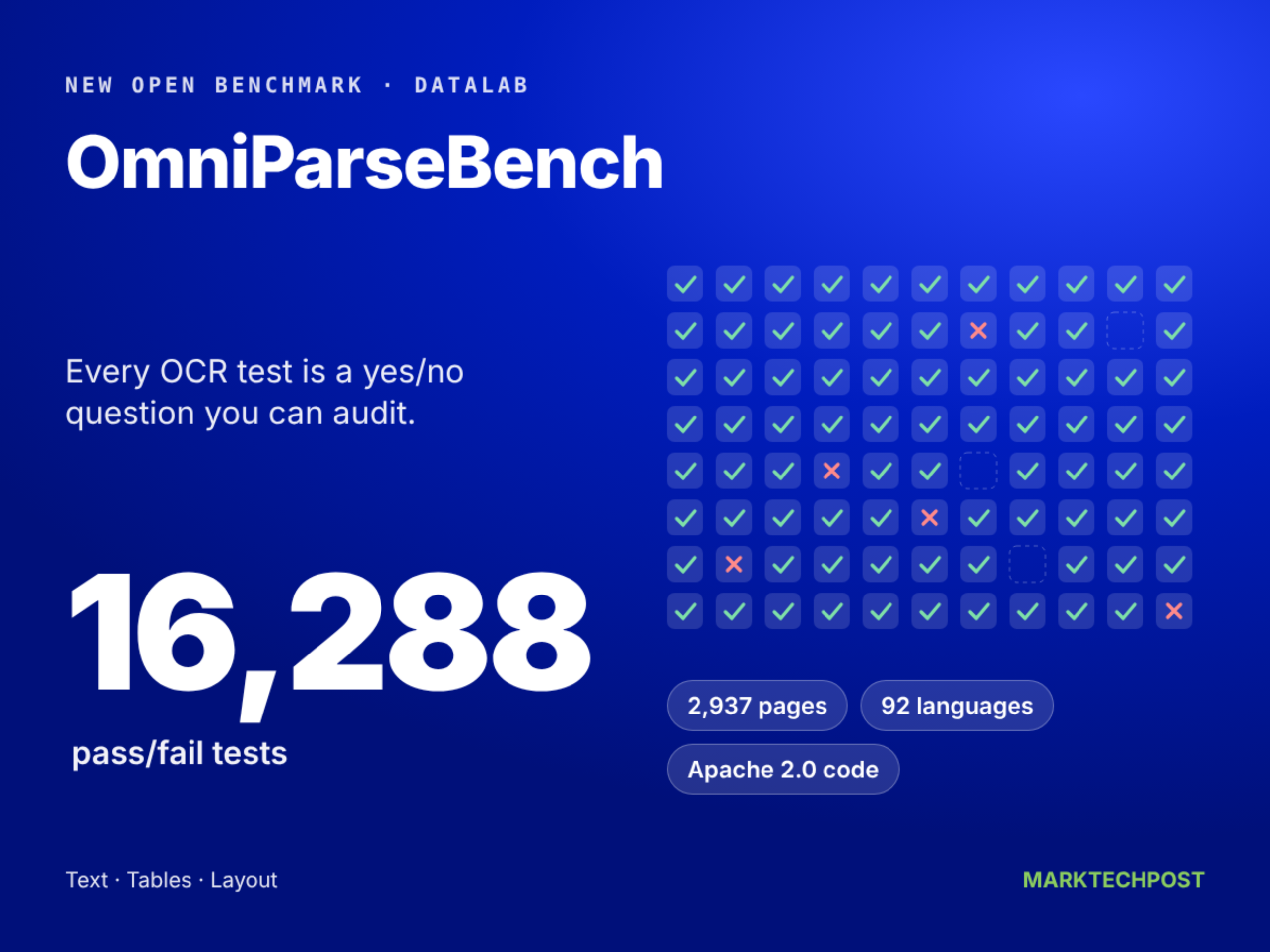
Datalab has launched OmniParseBench, an open-source OCR benchmark designed to evaluate document parsers. The benchmark includes 16,288 pass/fail tests across 2,937 pages from 2,343 documents, covering 92 languages. The dataset and code are publicly available, enabling engineers to assess how well parsers handle specific document types. Datalab's own parser, Datalab Accurate, ranks second in the initial leaderboard, behind Gemini 3.8 Flash. OmniParseBench evaluates parsers based on three categories: text, tables, and layout. Each test is a yes/no question about a single page, with scores calculated as the percentage of tests passed. The benchmark aims to provide a clearer, more actionable assessment than traditional leaderboards. It also includes detailed metadata, such as tags for structure, rendering, role, script, and language, allowing for customizable scoring. Datalab highlights limitations in existing benchmarks, such as the lack of standardization in scoring and overfitting to specific test conditions. The benchmark also records derivation methods, including publisher XML, PDF text layers, and human review. Datalab emphasizes that the best benchmark is one tailored to a user's own documents, encouraging vendors to use their own data for evaluation.

AI advances in longevity research and drug development
AI is transforming longevity research by providing new tools to identify potential drug targets and assess their effects on aging biology. Recent studies published in Cell and Nature Biotechnology highlight these advancements, including open AI tools for evaluating models and a clinical trial of an AI-developed drug for idiopathic pulmonary fibrosis. Alex Zhavoronkov, founder and CEO of Insilico Medicine, emphasized that while AI may eventually double human lifespan, this remains an ambition rather than a current forecast. The focus is on developing better medicines and testing infrastructure. The drug rentosertib, developed with AI assistance, reached a preclinical candidate stage in 18 months, though further trials are needed. The Nature Biotechnology analysis showed promising shifts in biological age markers, but these results require more investigation. Zhavoronkov urged companies to define success clearly and investors to assess a company's ability to turn predictions into credible evidence.
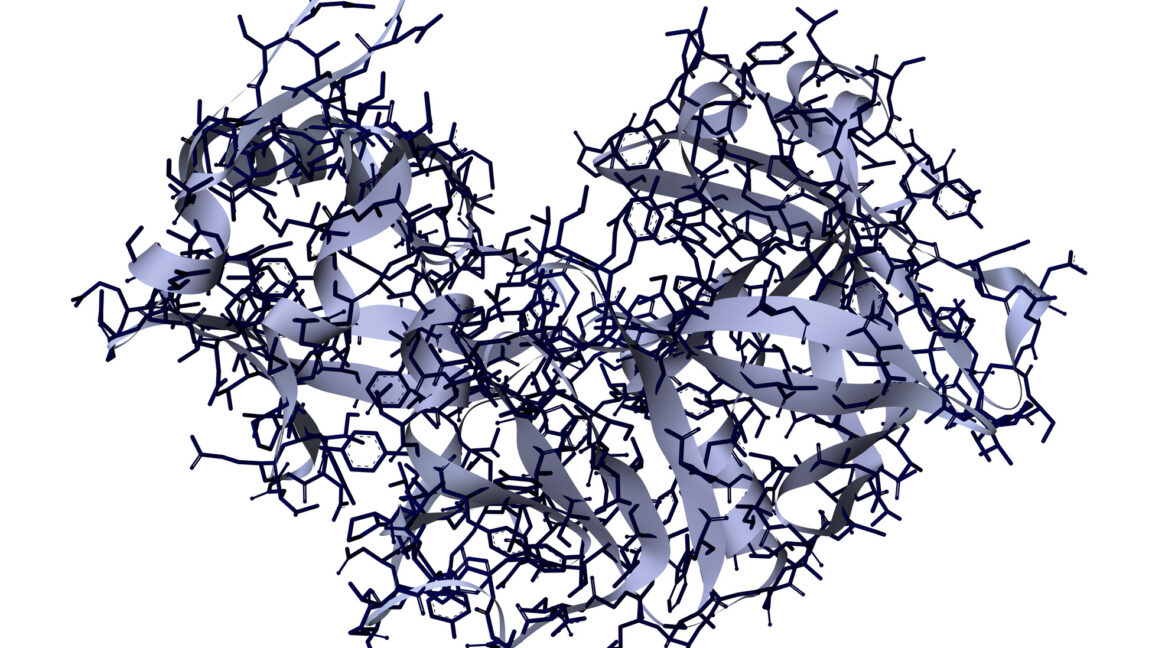
Ai-powered proteins target specific disease-related molecules
Scientists have developed a novel method to design proteins capable of breaking down other proteins, using artificial intelligence to bypass traditional evolutionary processes. By combining the catalytic cores of two protease types and replacing the rest of the protein structure, researchers created enzymes that can selectively cleave specific proteins. These enzymes were tested on proteins linked to neurological disorders, demonstrating their potential in targeted therapeutic applications. Proteases, naturally occurring enzymes that break peptide bonds, are widespread and efficient in degrading proteins. However, this new approach allows for precise control over which proteins are targeted, offering new possibilities in medical treatments. The study highlights the power of AI in protein design, enabling the creation of highly specialized enzymes with tailored functions. This breakthrough could lead to more effective and targeted therapies for diseases involving protein misfunction.

Ai's impact on science expands beyond mathematics
A recent study by Neil Thompson and his team at MIT suggests that AI is rapidly transforming multiple scientific fields beyond mathematics. The research, conducted between December 2025 and May 2026, tested OpenAI models like o1, o3, GPT-5, and GPT-5.5 on theoretical problems from research papers published after their training cutoff. The models solved 35% of these problems, up from 2% in mid-2024, with no signs of slowing progress. Thompson warns that AI's ability to tackle theoretical questions could reshape fields like physics and economics. OpenAI recently made headlines by solving the Navier-Stokes equations, a long-standing math challenge, sparking controversy after a NYU mathematician accused the company of 'gazumping.' This has led to a crisis in mathematics, with calls for AI use limits. Thompson notes that while AI may accelerate theoretical progress, human experts remain essential to verify solutions and ensure their validity. "We need people to generate good ideas to connect the dots," says Gabriel Manso, adding that AI can make mistakes, as seen in OpenAI's recent withdrawal of several solutions.

Microsoft introduces machine learning tool for enhanced weather forecasting
Microsoft has developed a machine learning tool that improves weather forecasts, offering greater accuracy for periods up to six weeks in advance. The tool, now open-source, was published in the journal Nature and addresses the common limitation of traditional physics-based models and existing AI systems, which typically lose reliability beyond two weeks. This advancement allows farmers and emergency responders to plan with more confidence. Microsoft joins companies like Google and Nvidia in leveraging AI for weather prediction. The tool represents a cost-effective solution, according to the researchers, who highlight its potential to enhance long-term forecasting capabilities. The publication date of the study is October 14, 2026, marking a significant milestone in the field of meteorological science. The researchers emphasize that the tool's open-source nature encourages further innovation and collaboration. By integrating machine learning with weather data, Microsoft aims to provide more reliable forecasts, which could have wide-ranging benefits across various sectors. This development underscores the growing role of AI in improving weather prediction, a critical area with significant implications for agriculture, disaster management, and public safety.

Ai's role in combating extreme heat: bridging prediction and action
Cities and researchers are leveraging AI to map and predict extreme heat risks, yet new research highlights a gap: these tools are often used to identify vulnerable populations rather than to drive effective government responses. A study published in Climate Risk Management analyzed how AI and machine learning are applied to manage extreme heat. Google recently expanded its AI-powered Heat Resilience data from 14 to over 50 cities, providing urban planners with building-level insights to target heat interventions. However, better predictions alone do not guarantee improved outcomes. Patel emphasized that the key is ensuring AI technology addresses real problems or removes critical bottlenecks. The focus is shifting from refining forecasts to linking predictions with actionable interventions. The challenge lies in transforming sophisticated heat predictions into tangible government actions. While AI can offer valuable data, its impact depends on how effectively it is integrated into response strategies. As climate change intensifies extreme heat, the urgency to connect AI insights with practical solutions has never been greater.

Men overestimate their AI knowledge, study finds
A new survey of over 5,400 Americans reveals that men are more confident than women about their knowledge of artificial intelligence, with 73 percent of men claiming to know OpenAI CEO Sam Altman, compared to 40 percent of women. However, the study highlights that many of these men are mistaken, as figures like Mira Murati, Susan Milner, and Craig Dalton are either fictional or non-existent. Harvard Kennedy School’s Laura Manley notes that men are more optimistic and confident in AI, sometimes to the point of overconfidence. The study also found that men use AI more frequently and answer factual questions correctly more often than women, though both genders make similar numbers of errors. The research further shows that men are more frequently mentioned in AI-related media coverage, with men appearing 14 times more often than women in headlines. When focusing on quoted experts, three-quarters were men, despite women making up about 29 percent of the AI workforce. Manley emphasizes the need for more women to be featured as experts and to express uncertainty, as the current discourse is dominated by confidence in either AI’s doom or abundance, leaving out voices that acknowledge uncertainty.
Tsinghua university launches ai-mathematics lab alliance to deepen integration
On October 11, 2026, the Qiu Chengtou Mathematics and Artificial Intelligence Laboratory Alliance was established at Tsinghua University, aiming to advance research in specialized mathematical large models, AI-assisted formal proofs and conjecture discovery, explainable AI, and cross-disciplinary intelligent computing. The alliance, led by Qiu Chengtou, president of Tsinghua University's Qiu Zhen Academy, emphasized the need for mathematicians to embrace AI rather than resist it. The alliance announced over 10 key 'AI+mathematics' achievements, including progress on the 7-dimensional homotopy sphere problem. AI tools were used to assist in proof strategies, simplify calculations, and verify mathematical results. Qiu noted that the alliance brings together over 1000 mathematicians and researchers from multiple institutions, including Tsinghua University, the Chinese Academy of Sciences, and the Shanghai Institute of Mathematics and Interdisciplinary Sciences, to foster young talent and develop a Chinese mathematical large model. OpenAI recently released 722 mathematical research papers, addressing long-standing problems in number theory, algebraic geometry, and other fields, sparking significant debate in the academic community. The alliance's work highlights the growing role of AI in mathematical research, with human mathematicians still playing a central role in conceptualization and proof verification.
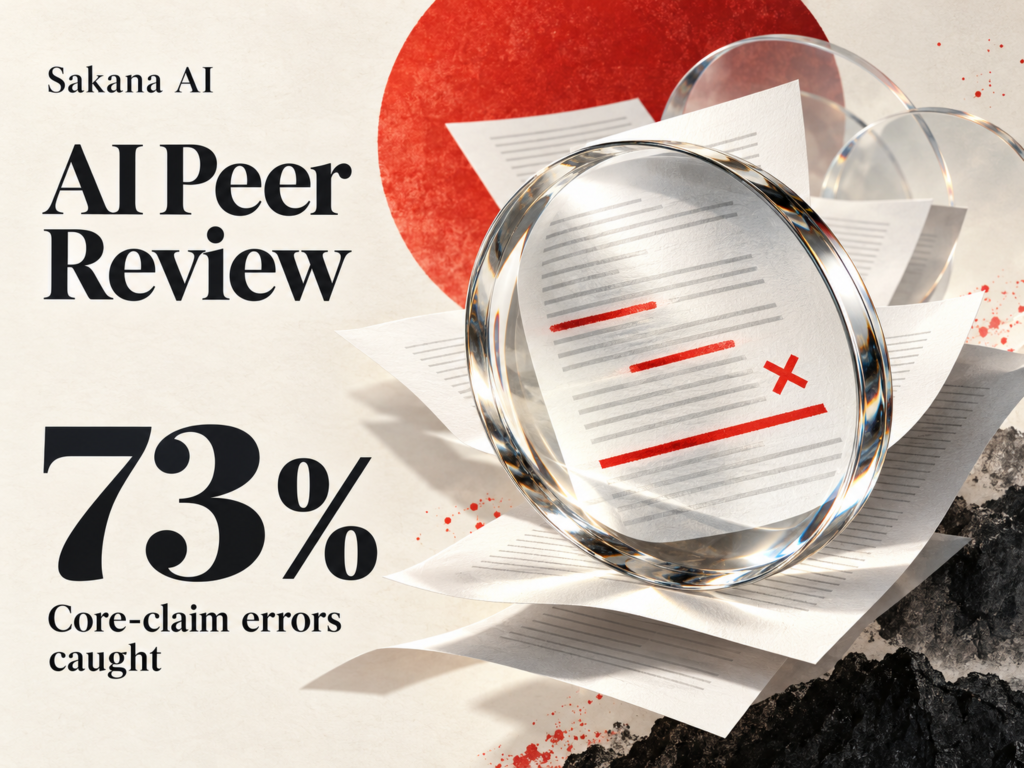
Sakana ai's AI review system detects 73% of core claim errors in research papers
Sakana AI has introduced a novel peer review system for AI research, capable of identifying 73.43% of core-claim errors in academic papers. The system, called Multi-Layered Review (MLR), employs three AI agents to analyze research papers, generating a structured critique that includes strengths, weaknesses, and recommendations. The system was tested against a Contradiction Benchmark, where errors were intentionally planted in 257 research papers from top conferences like ACL, AISTATS, CVPR, and ICML 2025. MLR outperformed existing baselines, catching 73.43% of distance-0 contradictions, compared to 14.81% by the best baseline, AgentReview. The system also achieved a Pearson correlation of 0.586 with human scores on ICLR 2025 submissions, close to the human-to-human benchmark of 0.742. While MLR emphasizes validity and experiments, human reviewers prioritize clarity and novelty. The system costs about $0.47 per review, with a single-prompt variant reducing costs by two-thirds, though detection accuracy drops slightly. All results are detailed in Sakana AI's paper, 'Beyond Imitation'.