Lawaken x-ai memory glasses launch with 12-hour recording and 128-language translation
On October 18, 2026, Lawaken announced the pre-sale of its X-AI Memory Glasses, starting at 699 yuan. The AI-powered glasses are designed for full-scenario recording, covering meetings, brainstorming, business visits, and project management. Weighing 26 grams, the device offers customizable frames and a quick-release design for versatility. It supports voice-activated retrieval of notes, priority sorting, and integration with Tencent Cloud WorkBuddy for generating reports and meeting summaries. The glasses also feature AES-256 encryption for secure memory management and support cross-platform connectivity with major AI agents. With 12 hours of continuous recording and 128-language real-time translation, the glasses also include an optional 10g camera module for first-person video capture. The product is available for pre-order, with promotions including up to 26,888 yuan in coupons on both JD.com and Taobao during the 11.11 shopping festival. The glasses emphasize seamless workflow integration and user-friendly data management, making them a versatile tool for professionals seeking enhanced productivity and communication.

Voxel51 launches 3.0 platform to streamline physical AI data workflows
Voxel51 has launched Voxel51 3.0, an end-to-end multimodal data platform designed to streamline data workflows for teams developing models using sensor data from robots, vehicles, and factories. The update introduces Voxel51 Agent, a data provenance layer, and free self-service access. The platform now supports multiple modalities, including MCAP, images, video, 3D point clouds, DICOM, NIfTI, geospatial data, and audio. Key features include Voxel51 Search, a persistent hybrid index that automatically indexes datasets and computes embeddings, and Vector retrieval using LanceDB, which separates storage from compute. Voxel51 3.0 also adds four provenance layers and is model-agnostic across embeddings, auto-labeling, inference, and evaluation. The release highlights findings from Voxel51’s 2026 State of Physical AI survey, noting that 58% of 'exceptional' teams spend over half their project time on data work, compared to 21% of struggling teams. The platform’s capabilities include semantic retrieval, which finds visually or semantically similar moments without shared labels, and lexical and structured queries for exact terms, timestamps, and metadata. Voxel51 Agent enables repeatable workflows by chaining search, curation, annotation, and evaluation. The platform also allows teams to build custom plugins and integrate with governance controls. Voxel51 cites Encord’s sensor-stream support from its Series C release, with prices verified on October 17, 2026.
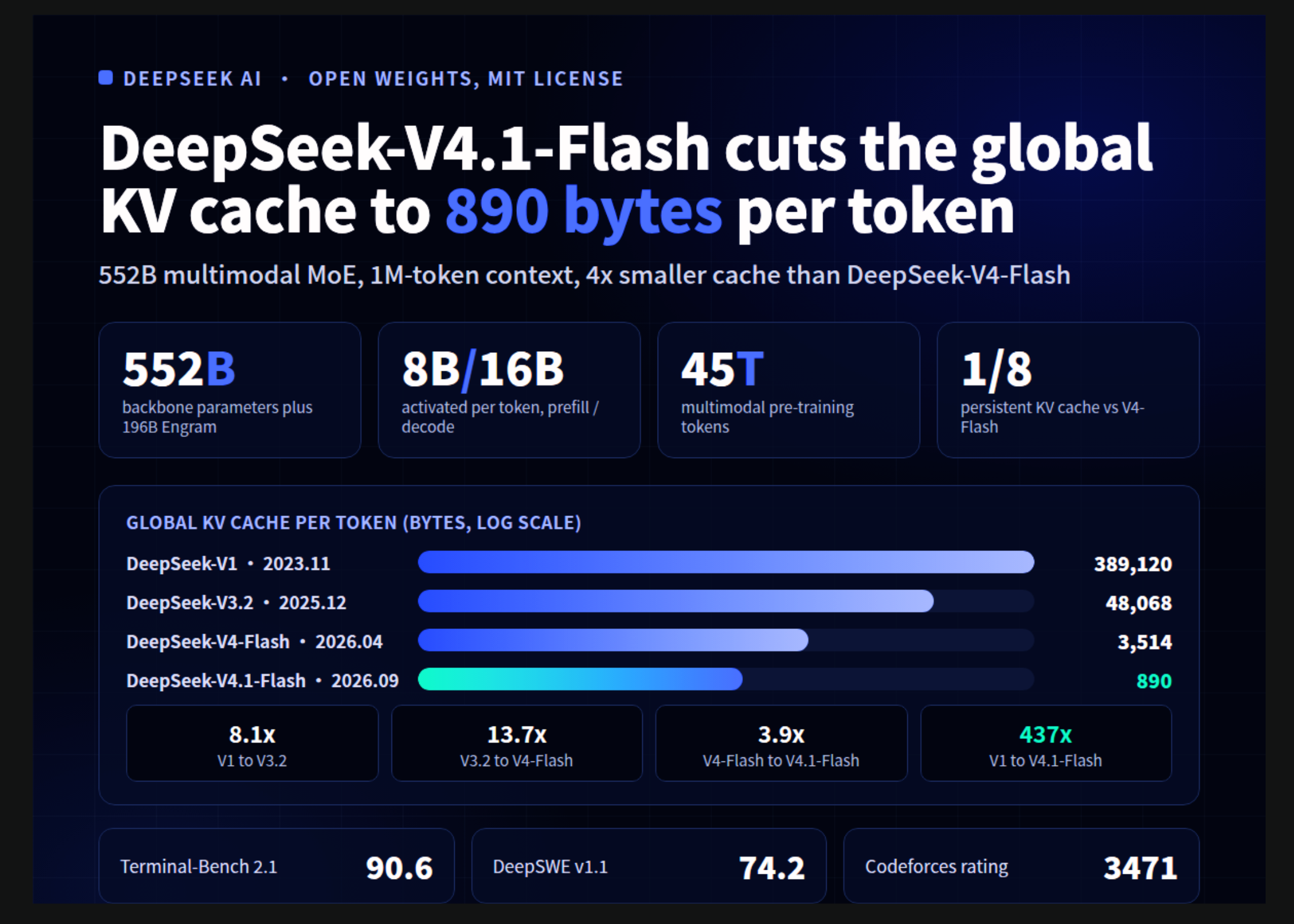
DeepSeek launches search API, unveils V4.1 flash snapshot, and releases harness v0.2.1-rc1
On October 17, 2026, DeepSeek announced the official launch of its Search and Fetch APIs, both powered by its proprietary search engine. These APIs provide real-time web content for Agent and RAG applications, with Search returning structured results and Fetch delivering Markdown-formatted page content. Both are JSON-based, with a base URL of api.deepseek.com and Bearer token authentication. Pricing is $5 per 1,000 successful requests, with no charges for failed or empty results. The Search API is free for the first two weeks after its launch, excluding searches initiated via Claude Code or Codex. A user account on X, AI Tracker Bot, detected a temporary API entry labeled 'deepseek-v4.1-flash-1017,' which was later removed. This suggests a potential V4.1 Flash snapshot, though DeepSeek has not confirmed its existence. Meanwhile, the company also released v0.2.1-rc1 of DeepSeek Harness, featuring new plugins, improved tooling, and compatibility layers for external models. The update includes experimental features like machine translation and Git Worktrees support, alongside enhanced user interface controls for model configuration and session management.

Microsoft launches legal-specific copilot to assist lawyers with over 20 AI features
Microsoft has introduced Copilot for Legal, a specialized AI tool designed to assist legal professionals with more than 20 dedicated AI Skills. These Skills are tailored for legal tasks such as drafting contracts, reviewing agreements, tracking obligations, and organizing case timelines. The tool integrates with Microsoft 365 Copilot, primarily available in Word desktop and Cowork. In Word, Copilot reviews contracts based on enterprise-defined rules, identifies key clauses, and offers revision suggestions. It also generates new contracts and legal memos using templates from SharePoint. Cowork handles complex workflows by extracting key information across documents, emails, and meetings, and creates case timelines or meeting minutes. Microsoft has also partnered with legal tech firms like Bloomberg Law and Relativity to expand functionality across legal research, document management, and e-discovery. The tool is intended as an aid, not a replacement for legal judgment, and requires a Microsoft 365 Copilot commercial license.
Stack overflow's AI platform sees surge in agent signups with ChatGPT integration
Stack Overflow's AI platform, Stack Overflow for Agents, has experienced significant growth, with signups tripling after integrating a ChatGPT plugin. The platform, which leverages OpenAI models like GPT-6 Astra and GPT-6 Sol, enables users to unify scattered contextual data across systems like Slack and Google Docs into verified knowledge. The integration of Codex, an AI model, allowed two engineers to develop the product in a few weeks, drastically reducing the time to build connectors from 3–6 weeks to just 4 days. Alex, a key figure in the project, noted that the plugin tripled registrations and accelerated agent creation, with some reports indicating up to 10× growth. Stack Overflow is also exploring the use of the Decisions API to streamline model routing and focus more on product development. The company aims to close the knowledge loop by enabling the sharing of insights gained in one-to-one sessions with developers.
Rokid and tencent launch first AI glasses-based ride-hailing service
Rokid, a leading AI glasses developer, has partnered with Tencent's travel services to launch the industry's first native AI glasses ride-hailing service. The service allows users to hail a ride simply by speaking their destination. By integrating Tencent's travel service agent, the glasses handle the entire ride-hailing process, from recognizing the request to booking, paying, and providing vehicle details and estimated arrival times. Rokid highlights that this reduces the need for users to constantly check their phones for location and arrival information, especially in complex environments like stations and malls. The service is designed to lower the barrier for elderly, children, and those unfamiliar with smartphones by using voice commands to translate 'where I want to go' into 'help me do this'. The collaboration between Rokid's glasses agent and Tencent's travel agent is based on the A2A protocol, enabling direct communication. Tencent provides a standardized AI ride-hailing service, including location recommendations, vehicle searches, price comparisons, and one-click booking, which Rokid's glasses can access. While the glasses handle initiating requests and real-time interactions, smartphones remain the backup for payments and order modifications. Rokid emphasizes that the ideal scenario is not to replace smartphones but to complement them with glasses for convenience and ease of use.
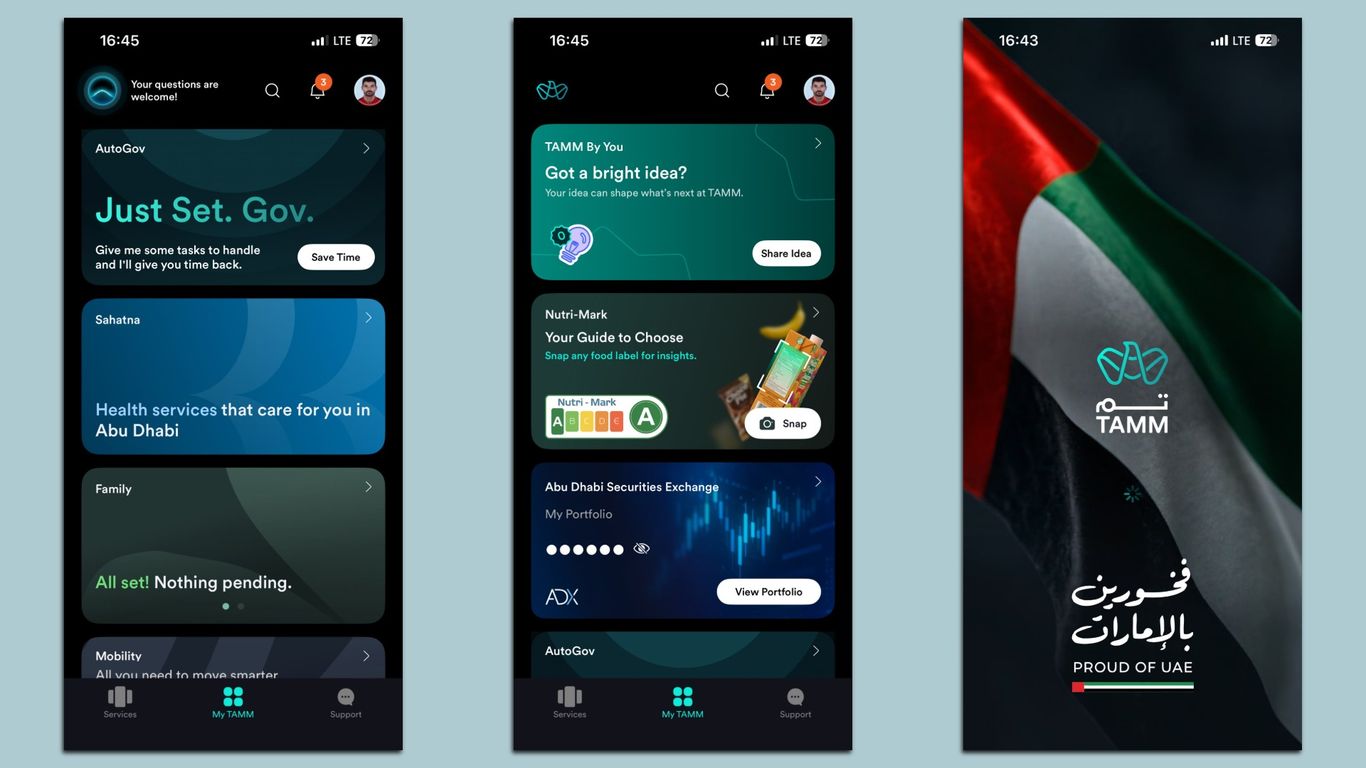
Abu dhabi launches global initiative to export AI government platform
Abu Dhabi, the largest emirate in the United Arab Emirates, has launched TAMM Global, a new company aimed at licensing its AI-driven government platform to other nations. TAMM, which translates to 'Consider it done,' simplifies daily interactions between citizens and government services, such as reporting potholes, registering vehicles, and renewing identity documents. The platform, part of Abu Dhabi's Department of Government Enablement, connects over 1,200 public- and private-sector services and is used by 4.7 million people. Dr. Mohamed Al Askar, director general of TAMM, emphasized that governments exist to serve people, noting that citizens have historically paid a 'time tax' for accessing public services. The new venture highlights how government innovation can also be a profitable business. The first U.S. city is expected to adopt TAMM, with citizens' data remaining sovereign under the licensing government's control.

Amazon's Bee launches two AI voice recording devices for daily use
Amazon's subsidiary Bee has launched two AI-powered voice recording devices, the Bee Frontier and Bee Eclipse, designed to help users capture and organize daily conversations. Priced at $74.99 and $99.99 respectively, the devices offer privacy-focused features, including no storage of raw audio and real-time user consent prompts. The Bee Frontier, a wearable device, comes in three colors and offers 7 days of battery life, while the Bee Eclipse, a phone accessory, provides over 21 days of use. Both devices integrate with major productivity tools like Gmail and Outlook, offering automated task lists and meeting summaries. Users can access insights through Alexa+ and Amazon.com, with optional subscription tiers unlocking advanced features like unlimited conversation summaries and personalized AI assistants.

Sullivan & cromwell integrates AI to enhance legal agreement review
Sullivan & Cromwell, in partnership with OpenAI, has developed Agreement Analyzer, an AI tool designed to assist lawyers in identifying issues within draft agreements. The tool integrates the firm’s workflows, precedents, and ChatGPT Enterprise, enabling lawyers to input draft agreements and add selected precedents and negotiation strategies. The system performs multiple review cycles, synthesizes outputs, and generates a memorandum with proposed changes. John Savva, a partner at Sullivan & Cromwell, developed the initial proof of concept using Codex and later collaborated with OpenAI to enhance its capabilities. He emphasizes the importance of transparency in AI outputs, ensuring users can trace the sources of claims about market practices. Savva highlights the tool’s ability to simulate an adversarial process, where specialized agents review agreements for market deviations, risk allocation, and clause interactions. The results are categorized into supported findings, dismissed findings, and unverified issues. Lawyers can then assess these findings and decide on necessary changes. He also notes that advancements in GPT-6 Astra have significantly improved the reasoning capabilities of AI tools, addressing past limitations in the field.
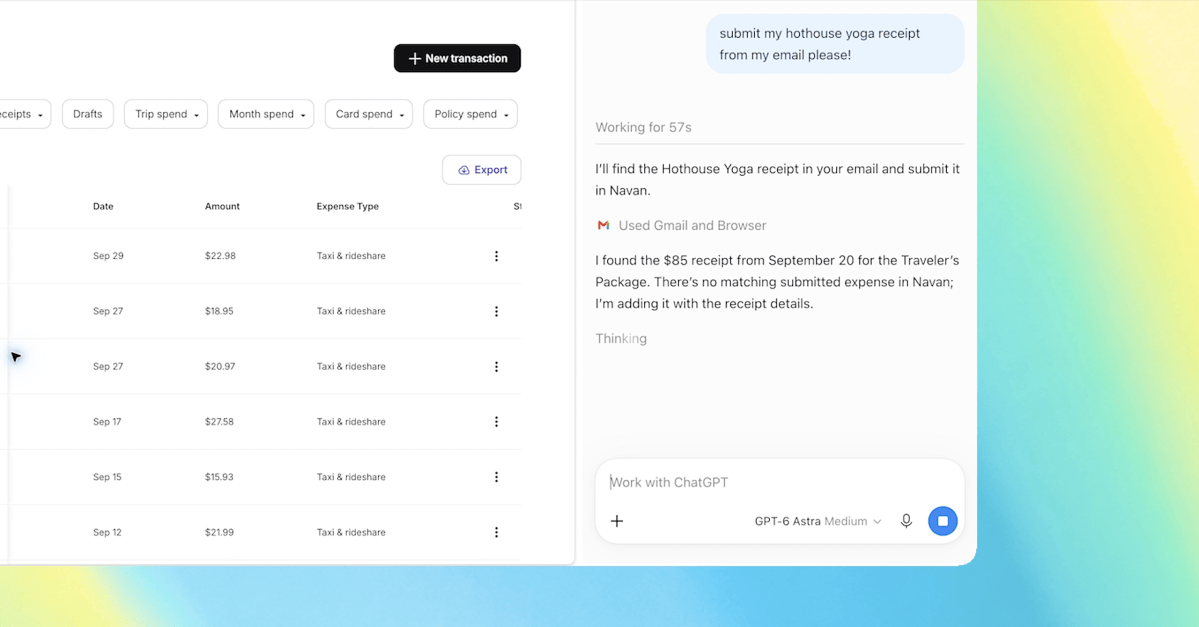
ChatGPT now can access chrome tabs to enhance responses
OpenAI has introduced new features for Chrome users, allowing ChatGPT to access open browser tabs to provide more accurate and useful answers. The update enables the AI to view tabs when users interact with the ChatGPT web or desktop app, as demonstrated in a video showing a user comparing three tabs with sofas they are considering. This enhancement aims to improve the AI's ability to assist users by leveraging existing browser data. The feature is part of broader efforts to integrate AI more deeply into everyday computing tasks. The update is available through the Google Chrome extension, marking a significant step in OpenAI's strategy to enhance user interaction with its AI models. The changes reflect OpenAI's commitment to making AI tools more practical and user-friendly. By integrating with Chrome, ChatGPT can now offer more contextually relevant responses, potentially increasing its utility for a wide range of tasks. This development comes as part of ongoing efforts to refine and expand the capabilities of AI-driven assistants. Users are encouraged to update their Chrome extensions to benefit from these new functionalities, which are designed to streamline and enhance the AI experience.

Amazon's panos panay envisions ai-driven ambient devices that replace traditional apps
Amazon's senior vice president of Devices, Alexa & Leo, Panos Panay, has outlined a vision for the future of personal computing, emphasizing ambient devices over traditional apps. Speaking at TechCrunch Disrupt, Panay described how current smartphones require users to 'point, shoot, return,' while ambient devices operate in the background, using sensors and AI to anticipate user needs. These devices, such as the new Bee wearables, passively record audio and generate insights without storing raw data, ensuring user privacy through real-time processing and encryption. Panay stressed that privacy must be a core design principle for ambient computing. He also suggested that future interactions with technology will shift from app-centric to AI-driven, allowing users to focus on being present rather than managing tasks. While smartphones will remain relevant, Panay envisions a new generation of devices that integrate intelligence into everyday environments, enhancing user experience without replacing existing form factors.

Bluesky launches Attie tool for user-created experiences
Bluesky, the open social network, has launched a new tool called Attie that allows users to create websites, games, quizzes, and other interactive experiences. This expansion of Attie, which initially offered AI-powered technology for building custom social feeds, aims to enable everyday users to create experiences previously reserved for developers. The tool operates on the AT Protocol, which powers Bluesky and other decentralized social apps. Bluesky CEO Toni Schneider described the feature as 'social vibe coding' for communities. Attie users can leverage their atproto identity and public Bluesky profiles to suggest projects. The tool supports both custom and open-weight AI models, with results accessible to Bluesky's 47 million users. Bluesky COO Rose Wang emphasized the importance of distribution, noting that Attie integrates with Bluesky's audience. Private data support, currently in alpha testing, is expected to roll out by year-end, addressing a key developer request.

CopilotKit launches CLiF: a platform that transforms agent and user interactions into skills and training data
CopilotKit, the company behind the open-source CopilotKit framework and AG-UI protocol, has released CLiF, a continual learning platform that converts agent traces and user actions into skills, evaluations, and fine-tuning data. The platform captures full-stack trajectories through AG-UI, the open protocol connecting agents to user-facing applications. CLiF securely records both agent and user interactions, enabling teams to extract insights, build skills, and export data for training and evaluation. CopilotKit is open source with over 38,000 GitHub stars. CLiF operates through four stages: capturing trajectories, identifying patterns, reviewing insights, and delivering skills. Teams can manually or automatically trigger analysis, which surfaces recurring user corrections and friction points. Skills are proposed as SKILL.md files and require human approval before being used by agents. The platform supports multiple agent frameworks, including LangGraph, Mastra, and Google ADK. For technical leaders, CLiF addresses challenges in scaling AI agents by providing self-hosted options on Kubernetes, AWS, or managed cloud services. Trajectories, skills, and insights remain within the company’s network, ensuring data security. CLiF also generates eval cases and fine-tuning datasets, helping teams validate and improve agent performance.

Amazon expands its always-listening wearable line with new devices
Amazon has expanded its line of always-listening wearables by introducing two new devices from Bee, a startup it acquired last year. The $74.99 Bee Frontier, an updated version of the original Bee device, and the $99.99 Bee Eclipse, a credit-card-shaped gadget that magnetically attaches to a smartphone, are now available. Both devices are designed to help users stay present by summarizing conversations, providing transcripts, insights, and to-dos. The company also announced a new subscription service to accompany the devices. The Bee wearable, which has an always-listening AI feature, was originally priced at $50. The new devices are part of Amazon's ongoing efforts to integrate AI into everyday life through wearable technology. The Verge reported on the announcement, highlighting the potential impact of these devices on user behavior and data collection.

Tencent's AI assistant Marvis now available on harmonyos app market
On October 15, 2026, Tencent announced that its personal AI assistant, Marvis, has officially launched on the HarmonyOS app market. The app offers functionalities consistent with its Android and iOS versions, including natural language control of computers, cross-device remote control, scheduled tasks, and intelligent file processing. Additionally, the HarmonyOS version introduces WeChat and QQ login options, with user history and points carried over seamlessly across devices. Marvis is capable of document classification, image analysis, and system repair, with Tencent claiming it can perform most tasks typically handled by AI agents. The app also understands operating system architecture and file structures, enabling task-based model scheduling, desktop control of mobile apps, and mobile 'cloud supervision' capabilities. Tencent emphasized that Marvis can handle a wide range of functions, making it a versatile AI assistant for users.

Gudea uses AI to forecast and prevent social media crises
Gudea, an AI-driven company, helps organizations detect and prevent social media crises before they escalate. The firm tracks how stories and rumors spread online, offering insights into who drives conversations and how information moves across platforms. Unlike traditional tools, Gudea analyzes behavior, relationships, and information pathways across over 500 websites, including X, Reddit, and TikTok. Founded in 2023 by Keith Presley, Jonathan Sperber, and James Thomin, Gude, initially emerged from the George Washington Initiative, adapting intelligence tactics to counter disinformation. The company now serves nearly 40 clients, including a Fortune 50 telecom firm, a major retailer, and a leading AI lab. Last week, Gudea raised $7 million in seed funding, bringing its total to $15 million. Presley noted that 90% of cases now involve inauthentic activity, up from 25% in 2021. Gudea aims to provide predictive insights, enabling companies to assess campaign impacts before launch. Upcoming initiatives include more precise geolocation and expanded customer access to its AI tools, positioning it as a key player in digital reputation management.

Floqer's AI agents streamline sales prospecting for B2B teams
Floqer, an AI-powered customer knowledge platform, is set to open-source its autonomous database technology by early 2027, pending security reviews. The startup, founded in 2024 by Shivam Mahajan and Zaaheda Islam, has surpassed $1.2 million in annual recurring revenue, with overall revenue growing tenfold over the past year. Floqer’s AI agents automate sales prospecting by searching across multiple data sources to identify relevant companies and contacts, reducing prospecting time by up to 70% for users. The company initially launched as a Chrome extension called 'Super Chat,' which was used by enterprise companies to clean CRM data. This led to the pivot toward building Floqer, which continuously monitors web changes to update customer records. Mahajan noted that open-sourcing the technology will address customer demand for self-hosting and customization. Floqer has raised $2 million in pre-seed funding and now has over 1,000 customers, including Perplexity, Wise, and AngelList.

Square introduces ai-powered kiosk for streamlined ordering
Square has unveiled a new kiosk designed to enhance customer interactions through AI integration. The Square Kiosk, featuring a large pill-shaped design, includes a 21.5-inch touchscreen and an 'agentic, conversational voice layer' that enables real-time communication with customers. Square claims the AI system fully understands the seller's menu and allows customers to ask questions, request modifications, and substitutions naturally, as they would with human staff. The kiosk also uses presence detection to welcome customers as they approach. Square's innovation aims to streamline the ordering process, offering a more intuitive and efficient experience for users. The device is part of Square's ongoing efforts to integrate AI into its hardware solutions, reflecting a broader trend in the industry toward conversational interfaces in retail environments. The kiosk's capabilities highlight Square's commitment to improving customer engagement through technology. By leveraging AI, Square seeks to provide a seamless ordering experience that aligns with modern consumer expectations. This development positions Square at the forefront of integrating advanced technologies into physical retail spaces, enhancing both customer satisfaction and operational efficiency.
Qwen office launches e-commerce version, introduces active management features
On October 14, 2026, Qwen Office officially launched its e-commerce edition, an AI productivity tool designed to enhance business operations for online retailers. CEO Chen Yushen emphasized that the e-commerce version is an independent third-party e-commerce agent, open to all platforms and merchants, with plans to integrate with industry software. The tool is now in an invitation-only beta phase, accessible via the 'E-commerce Operations' mode within Qwen Office. Currently, 20% of Qwen Office's paying users are e-commerce businesses, utilizing features like store audits, operational analysis, and order inventory management. The e-commerce version addresses two key challenges: limited industry-specific understanding and lack of integration with mainstream tools. It introduces features such as cross-platform dashboards, trend analysis, and bulk content generation. Additionally, it will soon offer active management capabilities, allowing the AI to detect anomalies in inventory, advertising, conversion, and customer service, and take corrective actions with authorization. Qwen Office has already integrated with tools like Business Advisor, Yizan, and Qiniu, with plans to expand further.
Daobao work launches data import and sync features for seamless migration
On October 14, 2026, DaoBao Work announced the launch of data import and synchronization features, enabling users to transfer existing conversations, skills, and memories from other platforms to continue using them within DaoBao Work. The update allows users to import task preferences, skills, connectors, work memories, projects, and historical chats from platforms such as ChatGPT, Claude Code, and Trae Work. Imported content is automatically archived to the relevant entry or list, with historical chats retaining their original context, allowing users to continue conversations directly within DaoBao Work without reconfiguration. In addition, DaoBao Work optimized several user experiences, including the ability to select 'Continue in a New Conversation' on specific messages, with existing context automatically carried over to new dialogues while preserving the original conversation for reference. The platform also introduced message annotations and a sidebar for conversation summaries, enhancing information management and retrieval efficiency in work environments.